
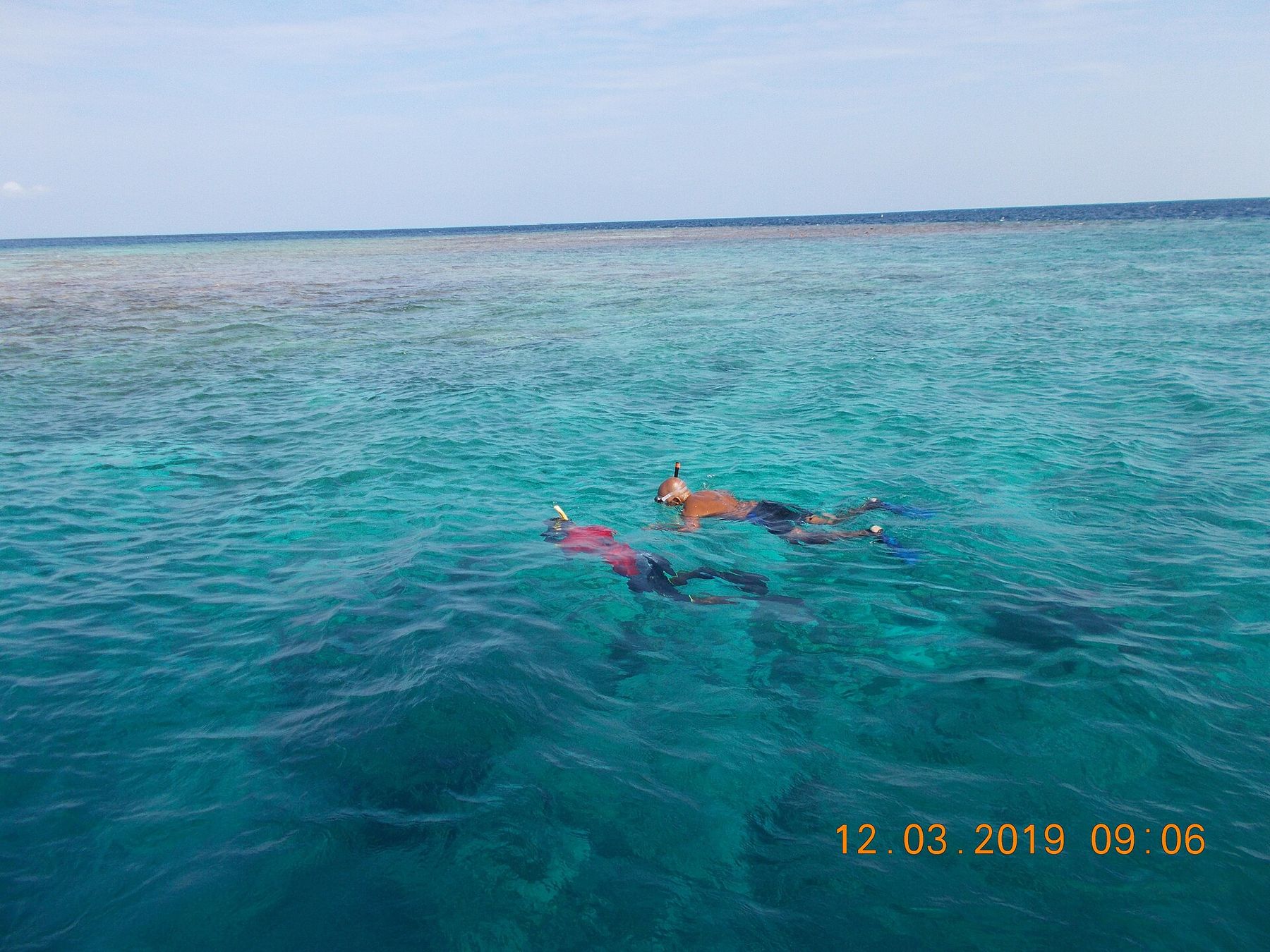
Reef and seaNever stand on, touch or kick coral; float flat, keep fins up. Ask about the current before you jump in, stay with the boat, and cover your back against the sun.
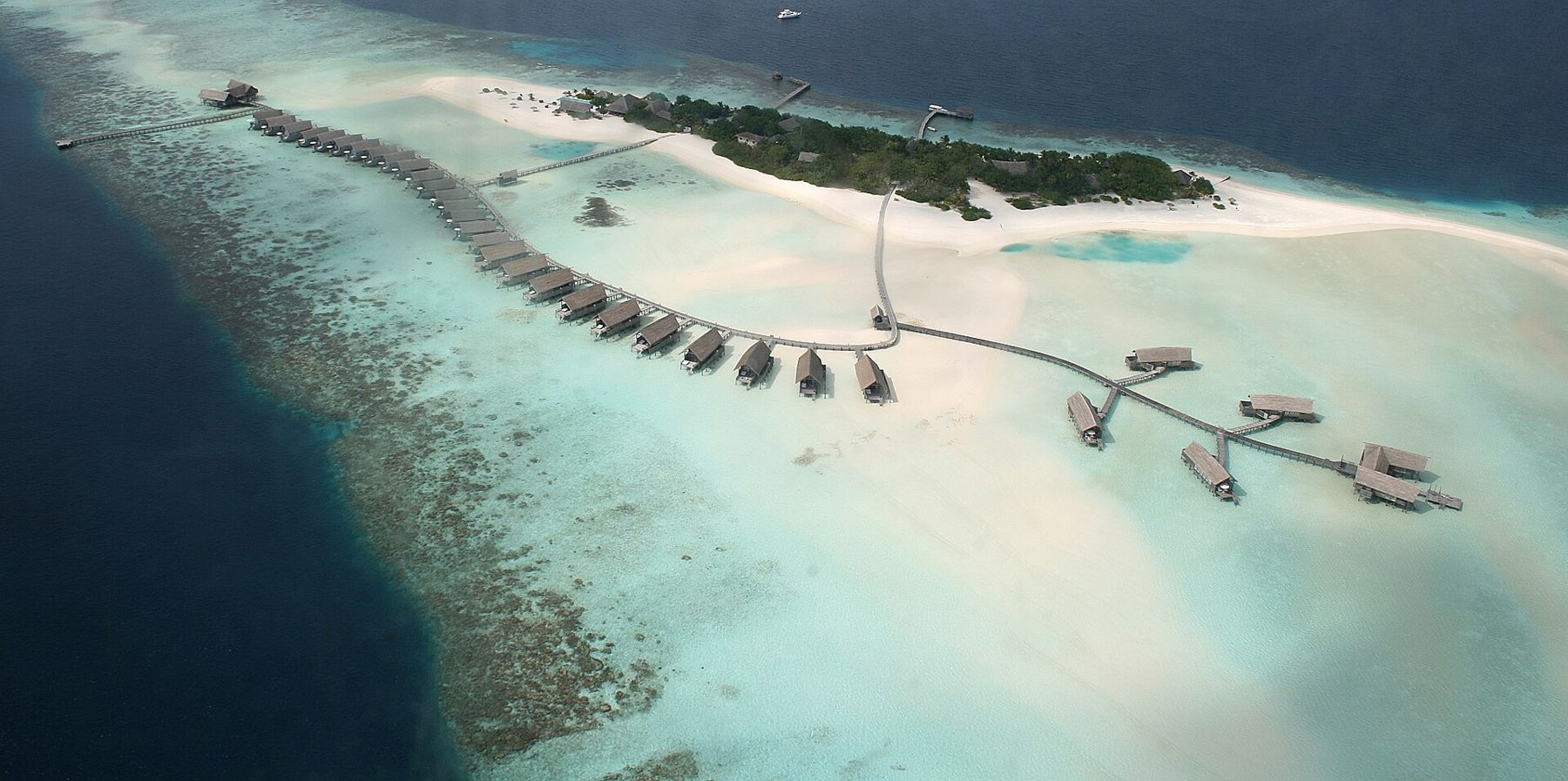
Every Maldivian island sits on a reef. The atolls are rings of coral built up over thousands of years on the tops of old volcanic ridges, and each island is a small heap of coral sand on one of those rings. That means the best thing about staying on Maafushi is not on the island at all. It is the water around it, where the pale lagoon drops away to reef edges full of fish, and where a short boat ride takes you to some of the clearest snorkelling in Kaafu Atoll.
You do not need to dive. Most of the life on a Maldivian reef lives in the top few metres, where the light is strongest, so a mask, a snorkel and a pair of fins open up almost all of it. What you do need is a little understanding of how these reefs behave, because the same currents that keep them healthy can carry a careless swimmer a long way.
House reefs and channel reefs
There are two kinds of reef you will hear about. A house reef is the reef that surrounds an island, close enough to swim to from the beach. On resort islands it is often the main attraction. On a local island like Maafushi, the shore has been changed by the harbour, breakwaters and building, and the lagoon by the bikini beach is better for a swim than for serious snorkelling. For good coral you usually go by boat.
The second kind is the channel reef. The Dhivehi word for a channel is kandu: a gap in the atoll rim where water moves between the lagoon and the open ocean. With every tide, huge volumes of water pour through these gaps, bringing food in from the deep. That is why channels draw the most fish, the larger animals and the brightest soft corals. It is also why they demand respect. Currents in a kandu can be strong, and they change direction with the tide.
Between the two lie the patch reefs and coral heads scattered inside the atoll, called thila when they rise from deeper water and giri when they reach close to the surface. Boat trips from Maafushi often visit one or two of these in a morning, sometimes combined with a stop on a bare sandbank for lunch.
What lives on the reef
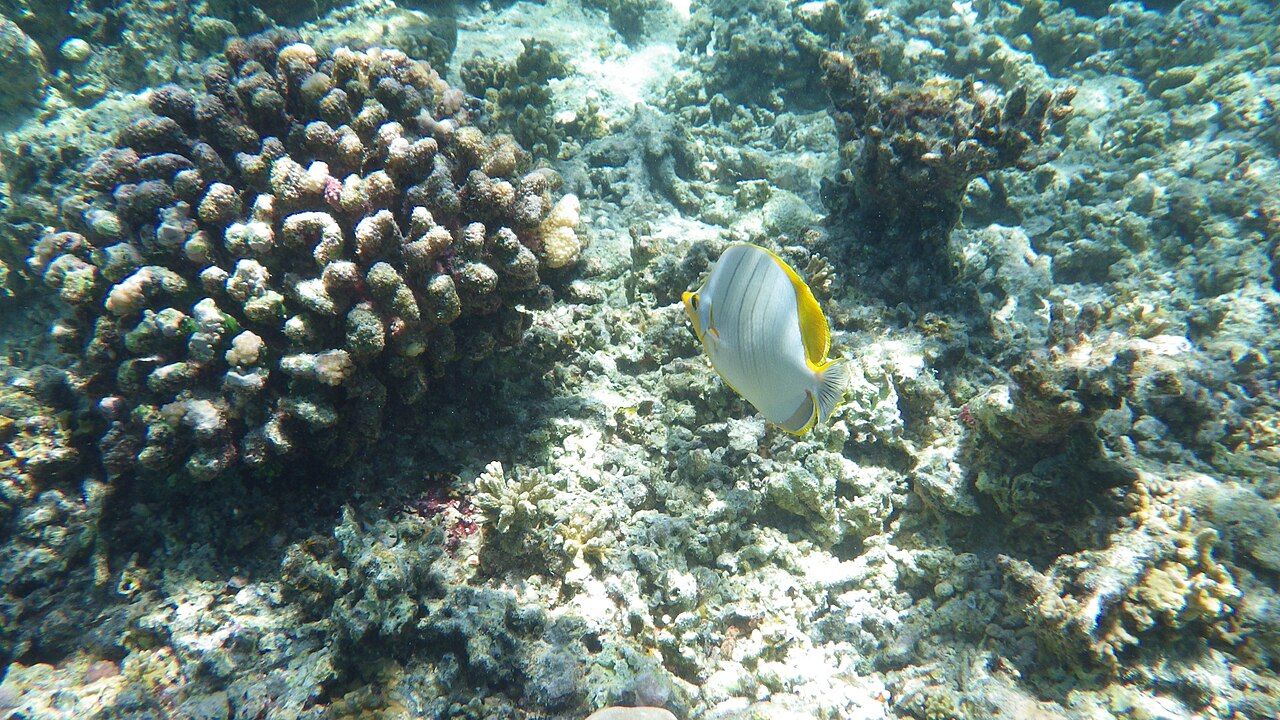
The first time you put your face in the water over a healthy reef, the number of fish is what stays with you. Shoals of small blue and yellow fish hang over the coral. Parrotfish graze on the rock with a sound you can sometimes hear, and the fine white sand of the islands is, in good part, coral they have eaten and passed. Butterflyfish move in pairs. Angelfish, triggerfish, wrasse, surgeonfish and moorish idols are common, and groupers watch from under ledges.
The coral itself comes in two broad groups. Hard corals build the reef: branching staghorn and table corals, rounded boulder corals, plates and brains. Soft corals sway with the water and are at their best in the channels, where the current feeds them. Look closely and you find giant clams set into the rock, sea cucumbers on the sand, and anemones with their resident clownfish.
Larger animals are part of the draw. Green and hawksbill turtles are common around these reefs, and our guide to turtles, rays and nurse sharks covers how to behave near them. Small reef sharks may pass along the reef edge; they are shy and give swimmers a wide berth. Eagle rays sometimes glide over the drop-off.
Bleaching and why it matters
Coral is an animal living in partnership with tiny algae that give it colour and most of its food. When the sea stays too warm for too long, the coral expels those algae and turns white. This is bleaching. Corals can recover if the water cools in time, but a long or severe event kills them.
The Maldives has been through several major bleaching events, notably in 1998 and 2016, when warm water spread across the Indian Ocean and large areas of shallow coral died. Recovery since has been uneven. Some reefs have regrown well; others are still mostly rubble and dead branches covered in algae, with fish but little living coral. You may swim over both kinds in a single trip.
This is the honest picture, and it is worth knowing before you go. The reefs here are still full of life, but they are under real pressure from warming seas. Every reef that is not trampled, kicked or collected from has a better chance of coming back.
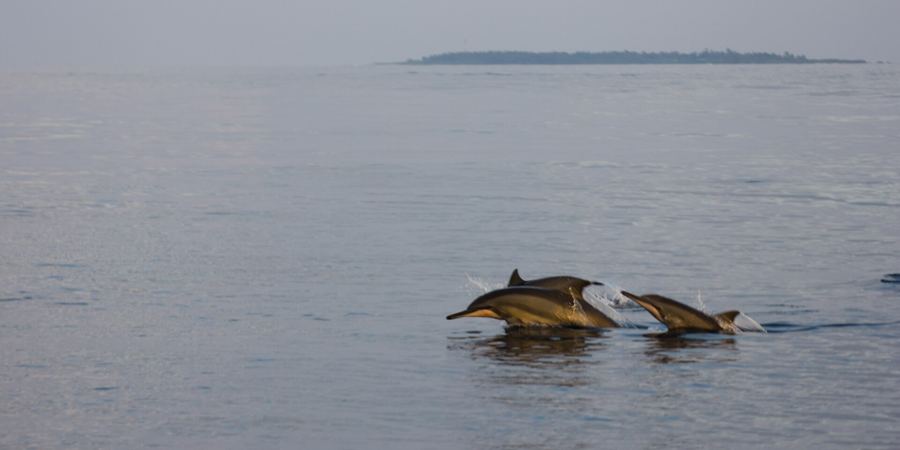 Next hop · The seaDolphins at dusk
How to snorkel without doing harm
Coral grows slowly, often only a few centimetres a year, and a single careless kick can break off what took decades to build. The rules are simple and they apply everywhere.
- Never stand on coral, even when the water is shallow and you are tired. If you need to rest, float on your back or swim to sand.
- Do not touch anything: not coral, not fish, not turtles, not shells with animals in them.
- Collect nothing. Taking coral or shells is not allowed, and it strips the reef.
- Keep your fins up. Most damage is done by fins swinging down into the reef, so float flat and kick gently from the hips.
- Do not feed fish. It changes their behaviour and can make them aggressive.
- Use a rash vest, and choose a sunscreen sold as reef-safe, or rely on cover rather than cream.
Every reef that is not trampled, kicked or collected from has a better chance of coming back.
If you are not a strong swimmer, wear a snorkel vest or carry a float. It lets you rest in the water without reaching for the reef, and good guides will offer one.
Currents, sun and staying safe
The single most important question to ask before you get in is which way the water is moving. In the channels, trips are often run as drift snorkels: the boat drops you up-current and you float along the reef while the boat follows and collects you. Done well this is easy and lovely. Done carelessly, with swimmers scattered and nobody watching, it is how people get into trouble.
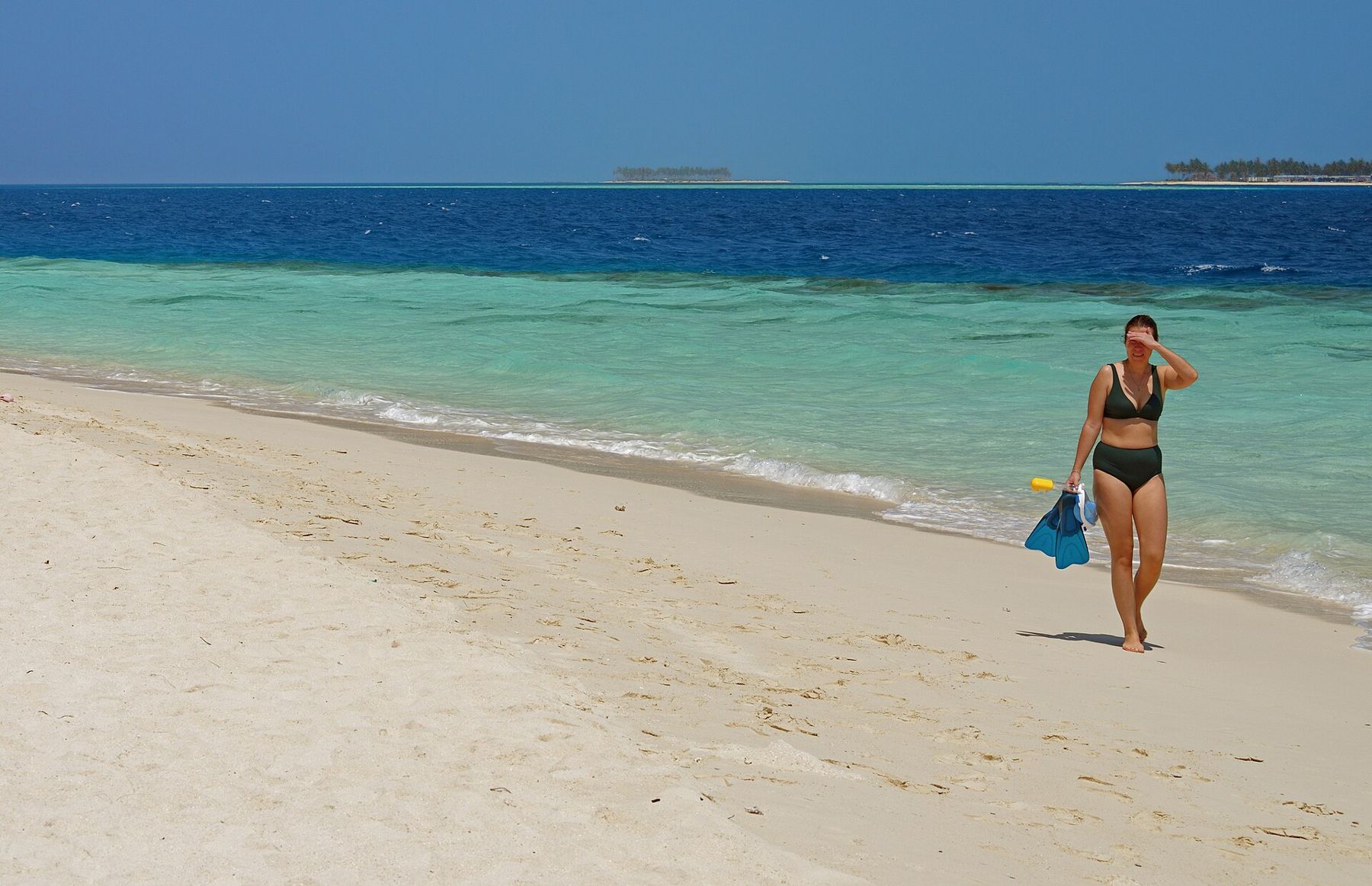
Stay close to your group and the guide. Look up every minute or so to check where the boat is. If you find yourself being carried away from the reef, do not fight straight against the current; swim across it, raise an arm and wait for the boat. Sea conditions change with the monsoons: the northeast monsoon months, roughly December to April, usually bring calmer water and better visibility, while the southwest monsoon brings more wind and swell, and some trips may be changed or cancelled.
The sun is the other hazard. On the water near the equator, your back and the backs of your legs burn fast while your face is down. A long-sleeved rash vest is the simplest protection, and some snorkellers wear thin leggings too. Drink water between stops.
Guided trips from Maafushi
Most visitors snorkel on a guided boat trip arranged on the island. Excursions are offered all along the main streets of Maafushi, and they usually combine two or three reef stops, sometimes with a sandbank, a turtle spot or a search for dolphins. Prices, durations and what is included vary widely, so ask exactly what you are paying for, whether masks and fins are provided and whether they fit, and how many people will be on the boat.
A good trip has a guide in the water with you, a briefing before each stop that covers the current and the plan, and a boat that stays close. A reasonable test is whether the crew tells you not to touch or stand on the coral without being asked. If they do, you are in good hands. Trips also run to reefs nearer neighbouring islands such as Guraidhoo, and the routes depend on weather and tide on the day.
Whatever you book, listen to the crew when they say a spot is too rough. The reefs will be there tomorrow.