
Reef and seaKeep a few metres from turtles, rays and sharks, never block a turtle rising to breathe, and never touch, ride, chase or feed anything. Float flat over coral.
For many people the moment they remember from the Maldives is not a beach. It is a turtle drifting up from the reef to breathe, close enough to see the pattern on its shell, or a ray lifting off the sand in a puff of grey. Around Maafushi these encounters are common, and a morning on the water often brings more than one. They are wild animals going about their day, and the best encounters are the ones where they hardly notice you.
Green and hawksbill turtles
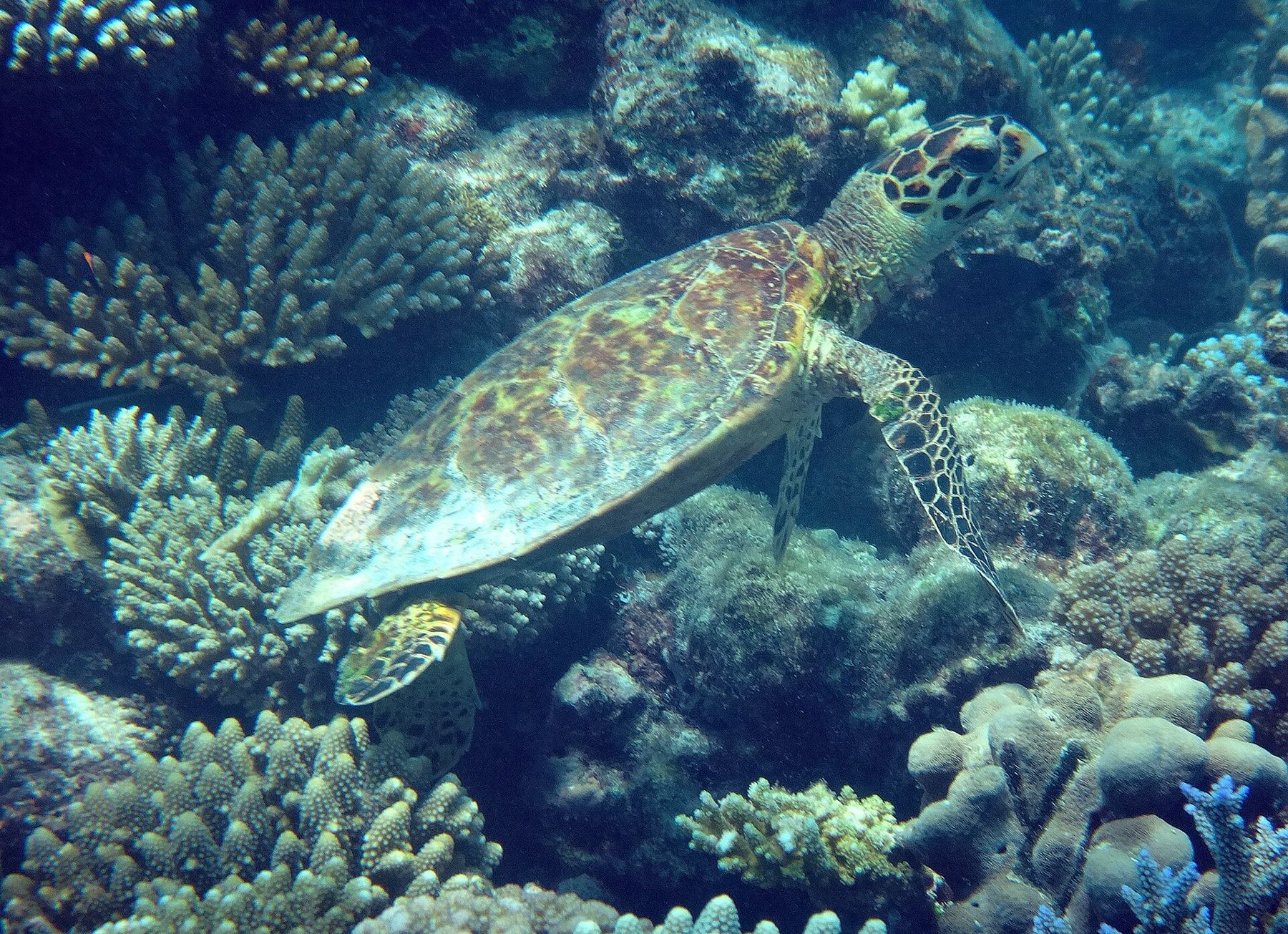
Two species of sea turtle are seen often in the reefs of Kaafu Atoll. The green turtle is the larger of the two, with a rounded head and a smooth shell. It feeds mainly on seagrass and algae, and you often find it grazing on sandy patches or resting on the bottom between breaths.
The hawksbill is smaller, with a narrow head and a pointed, hooked beak, and its shell has overlapping plates with a ragged edge at the back. It feeds on the reef itself, picking at sponges between the corals, so it is often the turtle you meet along the reef wall. Hawksbills are critically endangered worldwide, which makes every sighting matter.
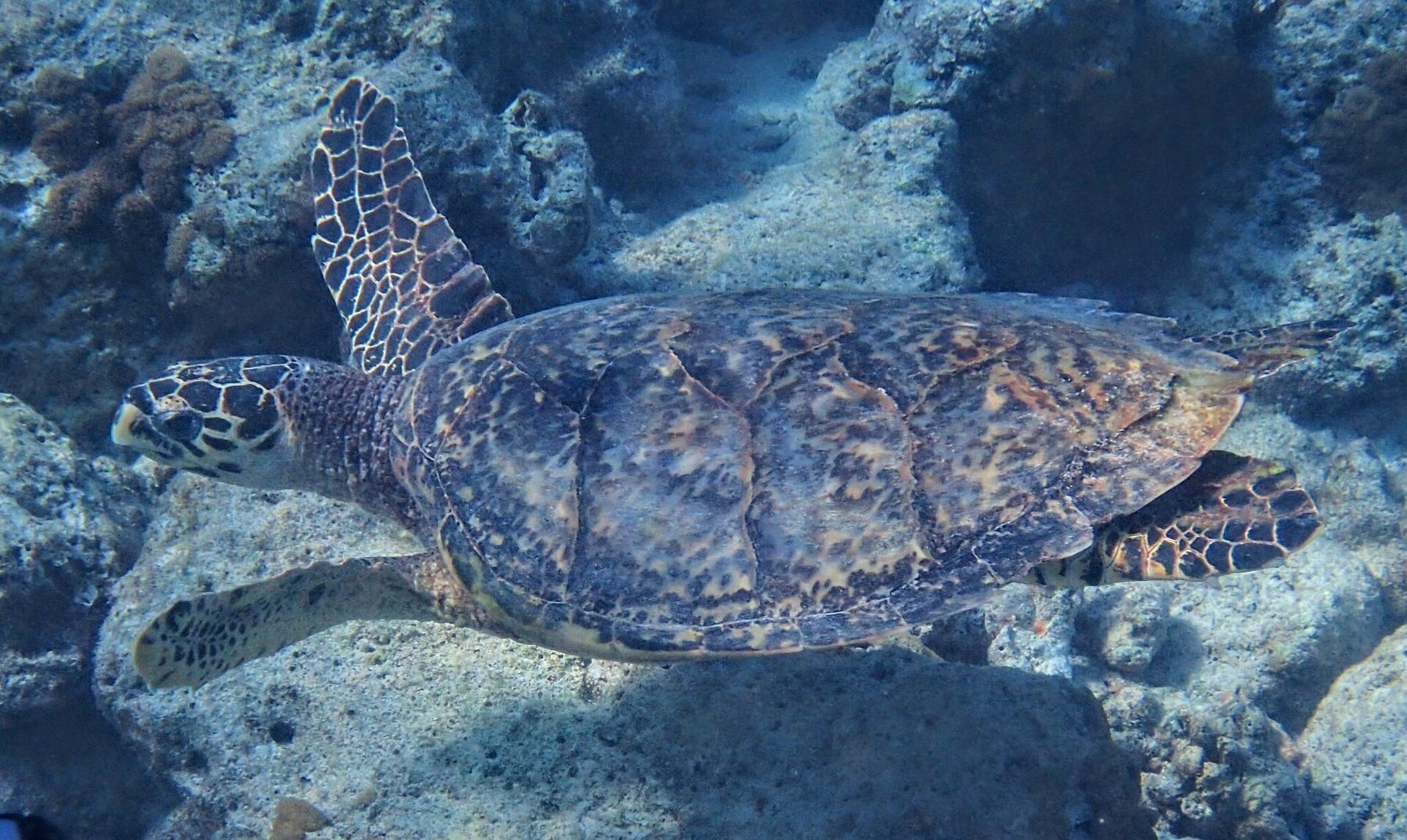
Turtles are protected in the Maldives. They must come to the surface to breathe, and a turtle that feels trapped under a crowd of swimmers will panic. Give it room above and ahead.
How to swim near a turtle
- Stay a few metres away and let the turtle set the distance. If it swims towards you, keep still.
- Never touch, hold or ride a turtle, and never chase one when it moves off.
- Do not swim directly above a turtle that is rising. Move aside and let it reach the air.
- Keep to small groups. Five people circling one animal is too many.
- Use no flash, and keep cameras and selfie sticks well back.
The calmer you are, the longer the turtle tends to stay. Float, breathe slowly, and watch it feed. It is the same reef sense that runs through our guide to snorkelling the reefs.
Stingrays in the shallows
Stingrays are common in the lagoons and on sandy bottoms, often half buried with only their eyes showing. At some spots in the atolls, rays have learned to gather where fish is cleaned, waiting for scraps thrown from a jetty or a boat. Large rays coming right up to the shore can be a strange and impressive sight.
 Next hop · The seaResort day passes from a local island
Watch them from a respectful distance and do not join in any feeding. Rays fed by people learn to crowd and push, and a tail barb is a real hazard if one is stepped on or grabbed. When you wade in shallow water over sand, shuffle your feet; the vibration warns a resting ray, and it will glide away rather than be trodden on.
Nurse sharks
Nurse sharks in the Maldives are mostly the tawny nurse shark, a brown, slow, bottom-dwelling animal with small eyes and short barbels by the mouth. By day they rest on the sand or under ledges, often in groups, and they feed mainly at night. Like the rays, at some harbours and fish-cleaning spots they gather in numbers, and night or evening visits to see them are offered on some islands, including the harbour at Fulidhoo in Vaavu Atoll.
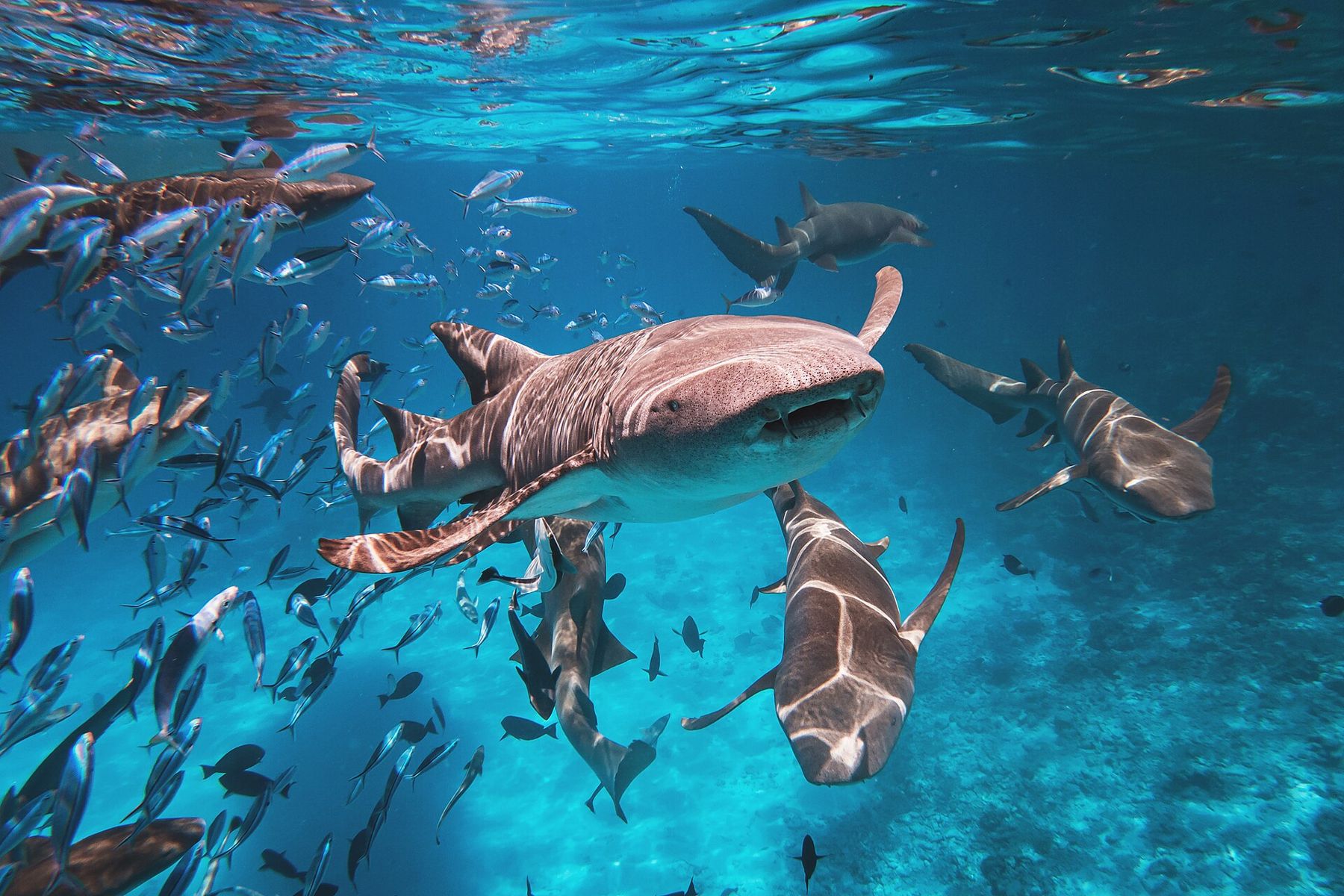
Nurse sharks are generally docile, but they are wild animals with strong jaws, and a shark crowded by swimmers or offered food behaves differently from one left alone. Keep your hands to yourself, stay calm, and never block one in. Shark fishing has been banned in the Maldives since 2010, and the sharks you see are part of why the reefs are healthy.
Why not feeding matters
Feeding marine animals changes them. Fish, rays and sharks that are fed learn to crowd boats and people, they come to depend on scraps, and they can become pushy in ways that lead to bites and injuries, to them and to swimmers. The food is also wrong for them. If a trip offers to feed animals so that you get closer, you can ask them not to, and you lose nothing: the animals are there anyway, and seeing them behave naturally is the better sight.
It also teaches animals to link people with food, and that can draw them into harbours and boat lanes where propellers are a real danger.
The same goes for touching. A turtle's shell, a ray's skin and a shark's body are covered in a protective layer that hands damage, and contact can pass on infection.
Going out from Maafushi
Most trips that look for turtles leave from the harbour in the morning, often combining a turtle reef with a coral stop and a sandbank. Others run in the late afternoon with dolphins in mind. Prices, routes and what is included vary, and sea conditions decide where boats can go. Calmer months bring easier water; the monsoon seasons shape what is possible.
Choose a trip with a guide in the water and a small group, and do not be shy about saying you would rather not chase or feed anything. Turtles and rays have been on these reefs far longer than any boat, and the aim is that they still are long after you have flown home.