
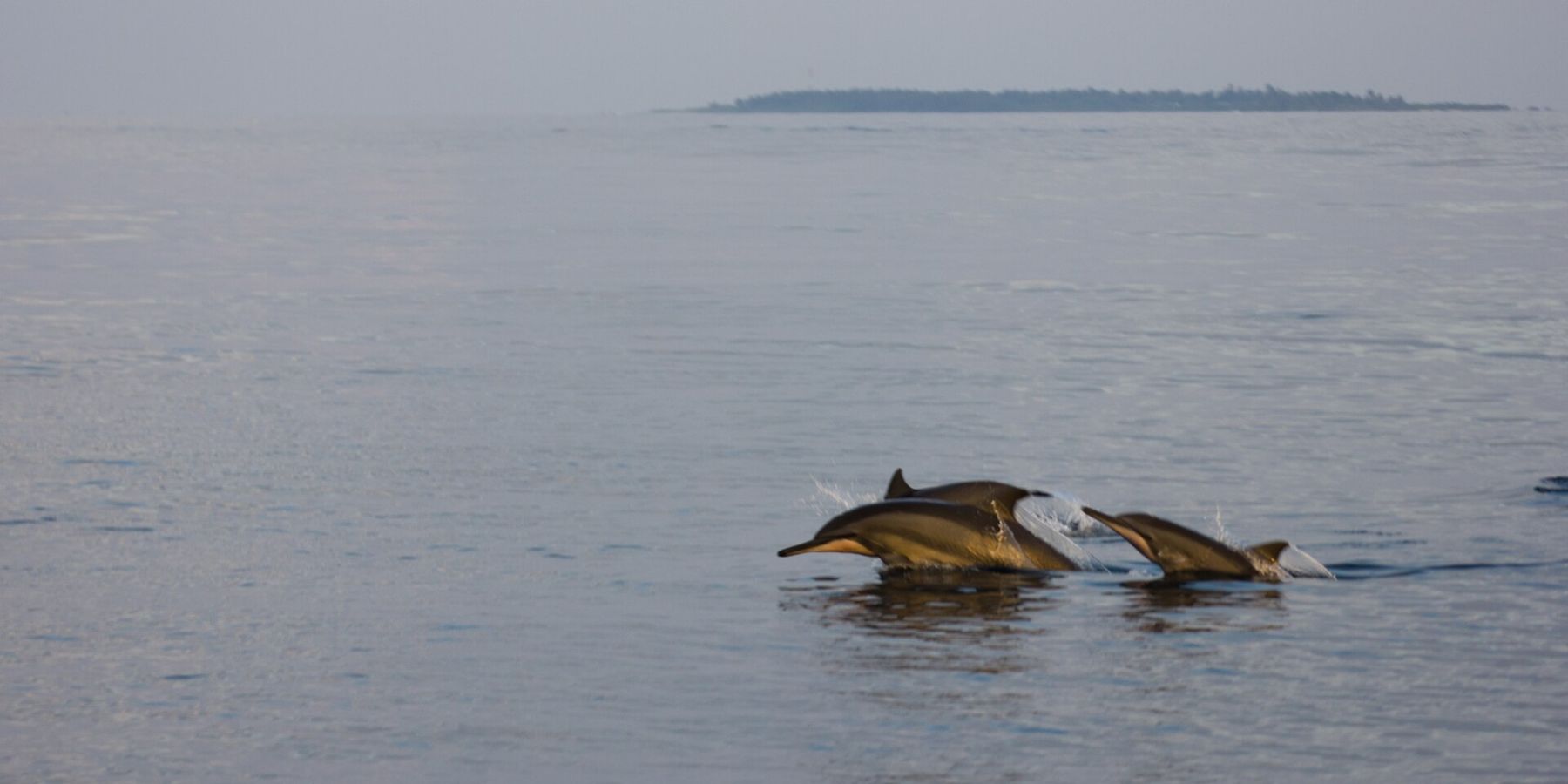
Reef and seaWatch from the boat; never swim after or chase dolphins. Seas in the channels can be choppy at dusk, so sit low, hold on and wear a life jacket.
There is a particular kind of late afternoon on the water near Maafushi: the sun low and orange, the sea smoothing out, the boat idling at the edge of a channel while everyone looks in the same direction. Then a fin, then several, then a dolphin leaping clear of the water and twisting in the air before it falls back. Spinner dolphins live in the Maldivian atolls in large numbers, and a sunset boat trip is the easiest way to see them.
Spinner dolphins
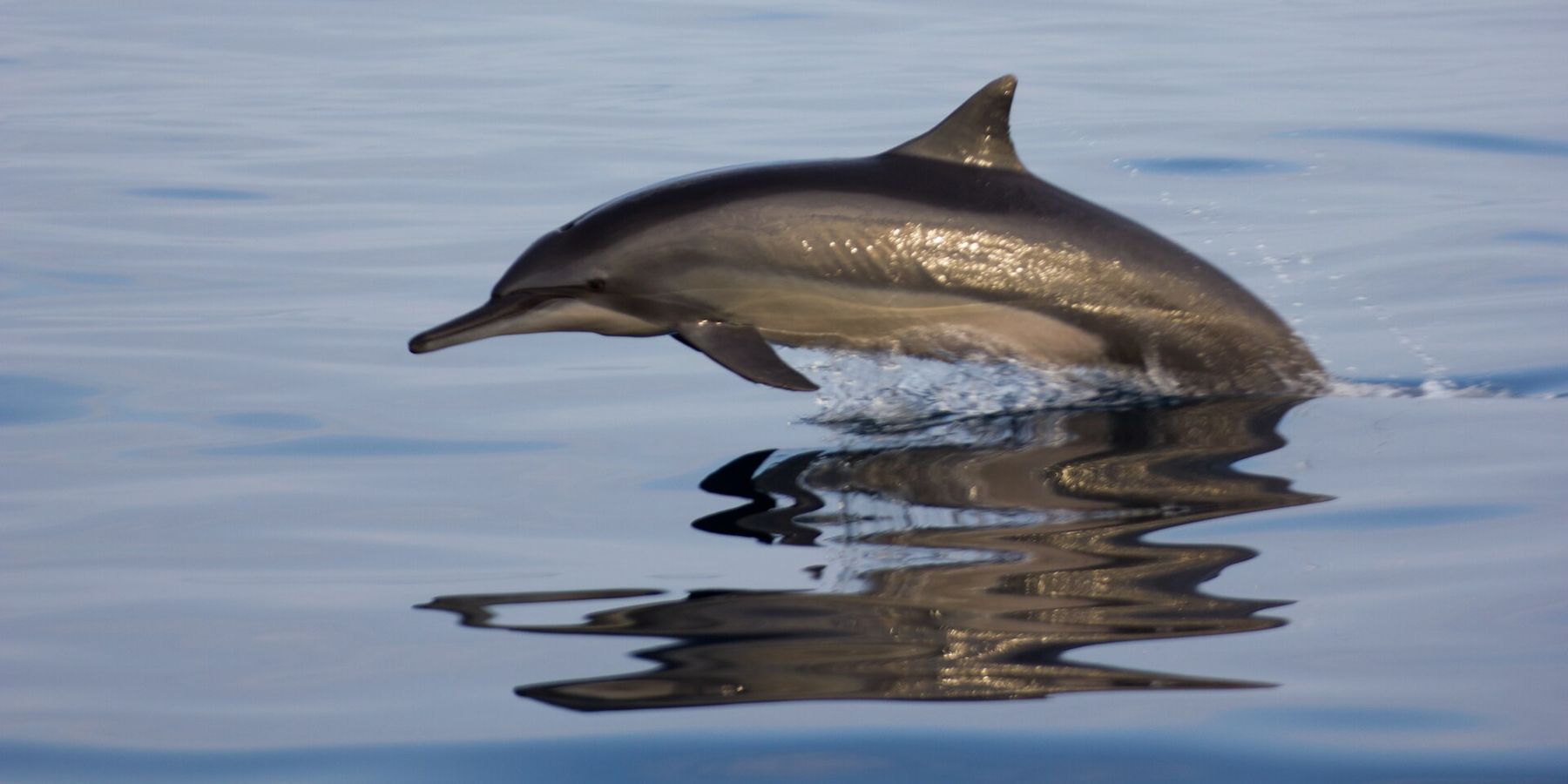
Spinner dolphins are small and slender, with a long thin beak and a darker back that fades to pale grey on the sides and belly. They take their name from the way they leap out of the water and spin along their length, sometimes several turns in one jump. Nobody is entirely sure why they do it. It may be a way of communicating, of shaking off parasites, or simply part of how a group keeps together.
They live in groups, called pods, that can number from a handful to several hundred. In the Maldives they are among the most commonly seen dolphins, and they are often found in and around the channels in the atoll rim, the gaps the Maldivians call kandu.
Why dusk
Spinner dolphins tend to rest during the day inside sheltered lagoons and channels, moving slowly and staying close together. Towards evening they become more active, and at night they head out to deeper water to feed on small fish and squid that rise towards the surface in the dark. The hours before sunset are when they are most likely to be on the move and leaping, often near the channels that lead out of the atoll.
That timing suits a boat trip. You leave Maafushi in the late afternoon, cruise to a channel where dolphins are often seen, and spend an hour or so watching the water as the light goes. Many trips end with the sunset on the way back, and some combine dolphins with a short snorkel stop earlier in the afternoon, as described in our guide to the reefs near Maafushi.
 Next hop · The seaTurtles, rays and nurse sharks
Realistic odds
On most evenings, in decent weather, boats from Maafushi find dolphins. It is likely, but it is never guaranteed. Dolphins are wild and move freely across the atoll, and some days they simply are not where the boats look, or they stay down and show only a few fins. Rough seas also make them harder to spot and less pleasant to watch.
Some trips offer a second outing if no dolphins are seen. It is worth asking about this before you pay, along with the price, the length of the trip and what is included. Terms vary from boat to boat and change over time.
How boats should behave
A good dolphin trip is a quiet one. The best encounters happen when the boat slows down, keeps a steady course and lets the dolphins choose how close to come. Spinner dolphins often approach boats on their own and ride the bow wave, and that is the moment everyone remembers.
- Boats should never chase dolphins, cut through a pod, or drive in circles around them.
- Approach from the side and slightly behind, never head-on, and at slow speed.
- Keep engine noise low and do not let several boats box a pod in.
- Leave if the dolphins change direction repeatedly or dive and stay down; that is a sign they want to be left alone.
Chasing pushes dolphins away from places they need to rest and can split mothers from calves. If your boat starts to chase, it is reasonable to say so. You can also choose a trip in advance by asking how the crew handles sightings.
Swimming with dolphins
Swimming with wild dolphins sounds appealing, but spinner dolphins resting during the day are easily disturbed, and swimmers jumping in beside a pod rarely see much more than a fast-retreating tail. The better experience, for you and the dolphins, is from the boat. If dolphins swim near you while you are already in the water on a snorkel trip, stay calm, keep your arms in, and let them pass.
Practical notes
Dusk on the water cools quickly, and the spray on the way back can soak you. A light layer and a dry bag help. Bring water, and if you are prone to seasickness, take something before you leave; boats idling in a channel swell can roll more than you expect. On deck in the harbour, remember that Maafushi is a local island, so cover up before you step back onto the jetty; our guide to local island rules explains why.
Keep your expectations loose and your eyes on the water rather than the horizon. Dolphins often show first as a small splash or a dark curve breaking the surface some way off, and a crew that has done this many times will usually spot them before anyone else. Once the pod is near, there is no need to move around the boat; stay seated, hold on, and let the dolphins come to the side where you are.
For photographs, set a fast shutter speed and be ready before the dolphins leap; they rarely jump in the same place twice. Then put the camera down for a while. The light on the water at that hour is reason enough to be out there.
Sea conditions follow the monsoons. The northeast monsoon, roughly December to April, usually brings calmer evenings, while the windier southwest months can mean choppy channels and cancelled trips. Whatever the season, the crew will know on the day whether it is worth going out.