
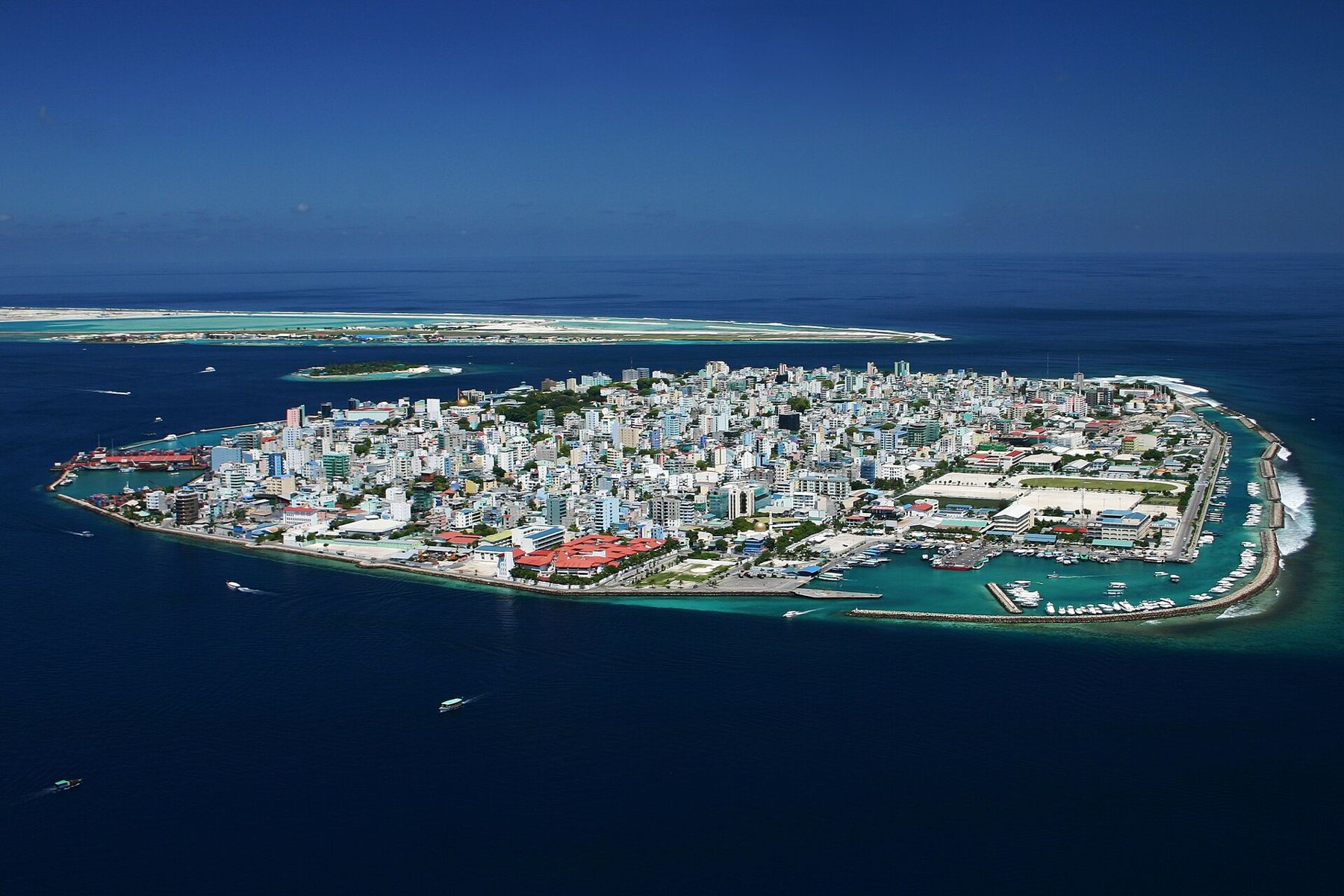
Reef and seaMalé has no swimming reef of its own; the harbour water is busy with boats. Save snorkelling for the atoll, and drink plenty in the city's heat.
Seen from the air, Malé looks impossible: a small island covered edge to edge with buildings, ringed by sea walls and harbours, with almost no green and no empty ground. More than a third of the country's people live in and around the capital, and it is one of the most densely populated cities in the world. After a few days on Maafushi, where the loudest sound at night may be the sea, a day in Malé is a shock in the best way.
It is also the place to understand the Maldives as a nation rather than a beach. The government, the courts, the main markets and the oldest mosque are all here, packed into an island you can cross on foot in well under an hour.
Ferries in, then the city on foot
From Maafushi, shared speedboats and the slower public ferry run to Malé, and the details are in our guide to getting to Maafushi. Timetables change and the public ferry does not run every day. Most boats arrive on the city's waterfront, close to the main sights.
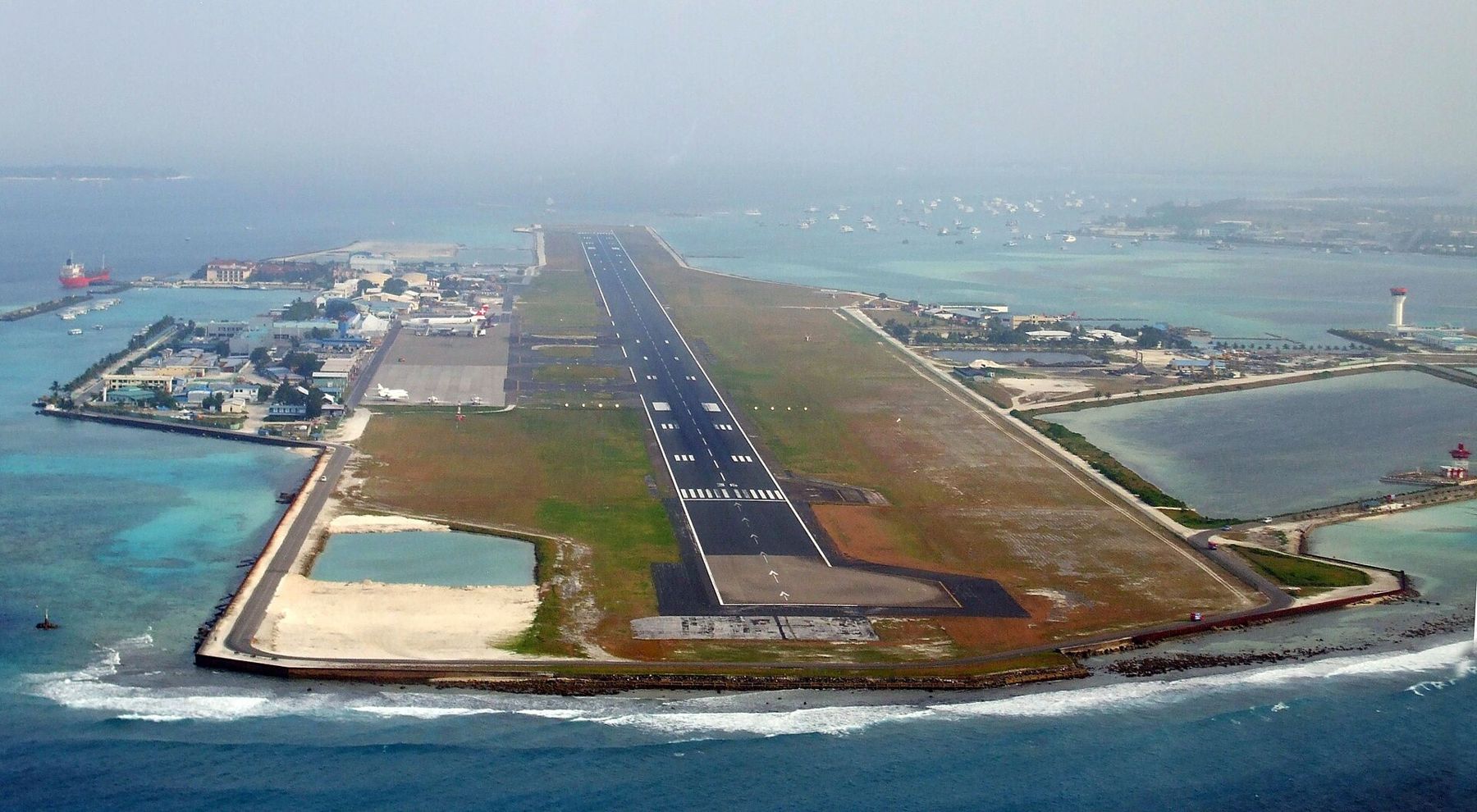
Once there, walk. The streets are narrow and busy with scooters, and pavements come and go, but nothing is far. Taxis exist for heavy bags or heat. Ferries for nearby islands, including the one to Villingili, leave from terminals around the edge of the island, and the airport island and Hulhumalé are linked to Malé by a bridge.
A loose plan works best. Start early, while the air is cooler, with the mosques and Sultan Park, which sit close together near the middle of the north shore. Break for lunch in one of the small local cafés, where short eats called hedhikaa, little fried and baked snacks often filled with tuna, sit on plates on the table and you pay for what you take. Spend the afternoon at the markets and along the waterfront, when the fishing boats come in, and leave enough time at the end of the day for the boat back.
The Old Friday Mosque
The Hukuru Miskiy, or Old Friday Mosque, is the most remarkable building in Malé. It was built in 1658 from blocks of coral stone, cut from the reef and carved with fine geometric patterns and Arabic script, then fitted together with great precision. Inside, the woodwork and lacquered panels are said to be among the best of their kind in the country. Around it lies an old cemetery with carved coral headstones, and beside it stands a tall white minaret.
The mosque is still a place of worship, and visiting the interior usually needs permission, which may or may not be given on the day. Even from outside, the coral walls are worth seeing up close. Dress modestly, with shoulders and knees covered and women carrying a scarf, and stay quiet around prayer times.
Even from outside, the coral walls are worth seeing up close.
The Islamic Centre and Sultan Park
A short walk away, the golden dome of the Islamic Centre rises above the rooftops, the most visible landmark on the Malé skyline. Its large mosque can hold thousands of worshippers. Visitors are sometimes allowed in outside prayer times when properly dressed; if you go, take off your shoes, cover up and follow any directions from the people at the door.
 Next hop · Island waysLocal island rules, explained plainly
Nearby is Sultan Park, a small public garden on the grounds of the old sultan's palace, one of the few shady green spaces in the city. The National Museum stands in the same area and holds royal objects, old weapons, coral-stone carvings and pieces from the islands' history before Islam. Opening hours vary and the museum closes on some days.
Elsewhere in the old part of town you pass smaller neighbourhood mosques and older low houses squeezed between new apartment blocks. Malé has rebuilt itself upwards again and again as the population has grown, so the old and the new stand very close together, and a single lane can hold both.
All of these places sit within a few streets of each other, and with the Presidential area and the main square nearby, you can see the civic heart of the country in a morning.
The fish market and the waterfront
The busiest part of Malé is its northern waterfront, where the harbour meets the city. Here the fish market fills in the afternoon as boats come in with tuna and reef fish. The tuna are carried up and laid in rows on tiled floors, then cut with long knives at great speed. It is noisy, wet and fascinating, and it shows how central the sea still is to Maldivian life and to what you eat on a local island.
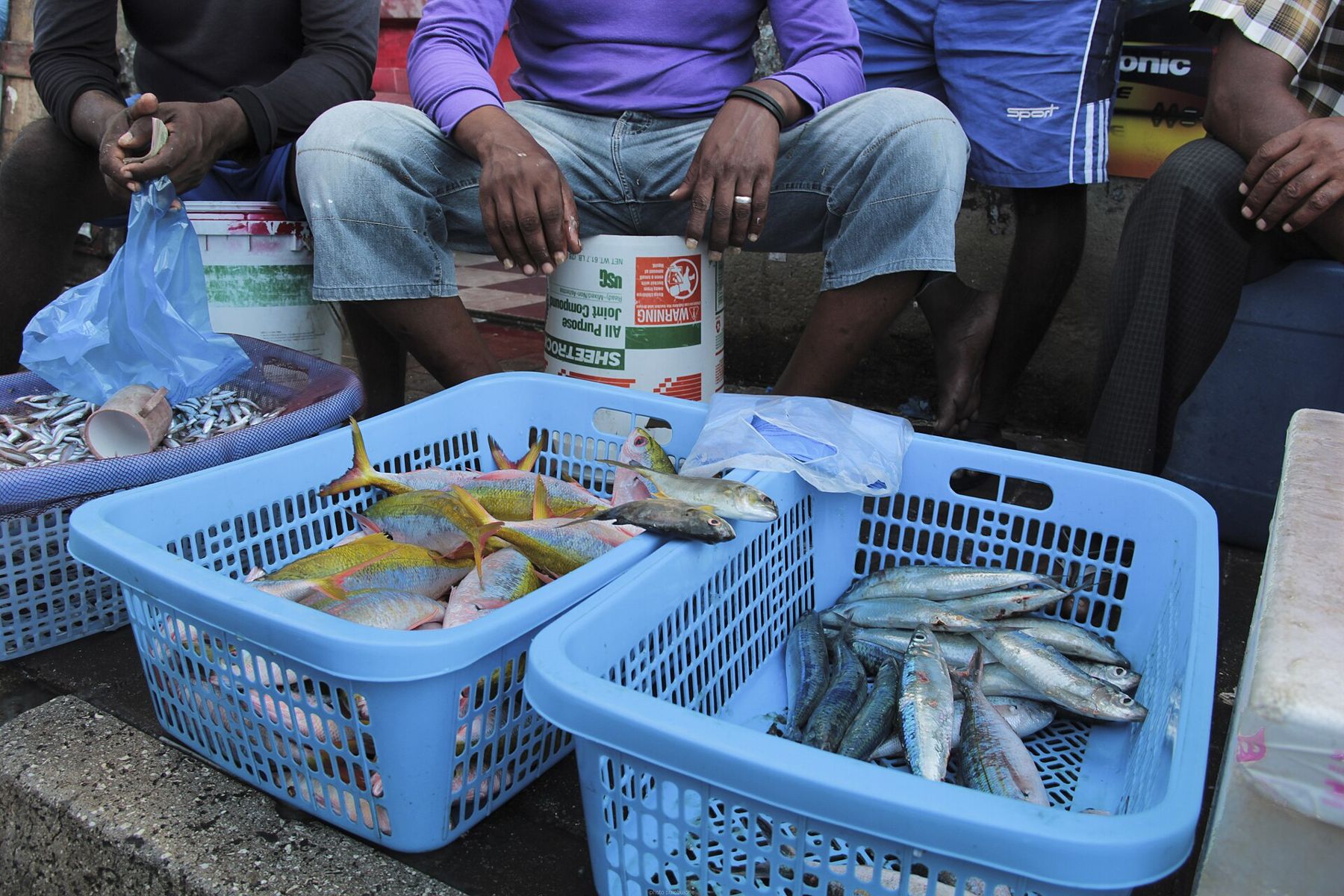
The local market next door sells fruit and vegetables from the outer islands, bunches of bananas and coconuts, chillies, betel leaves, and jars of dried and smoked fish. Things move quickly and space is tight, so stay out of the way of anyone carrying fish. Ask before photographing people, and accept a no.
Walk along the waterfront from here and you see the working harbour: dhoni, the traditional wooden boats, cargo vessels, speedboats and ferries jostling at the quays. Towards the evening the sea wall becomes a place to sit, and families come out once the heat drops.
On the eastern side of the island, a seafront walk and a small artificial beach give you somewhere to look out over open water rather than harbour. Local people swim there, and the same modest dress applies in the water as on the street, so most visitors simply sit, watch the surf break on the outer reef, and see the boats and planes come and go towards the airport.
Prayer times, Fridays and practicalities
Malé runs on the rhythm of the five daily prayers. Many shops and cafés close for a short time at each call to prayer, and on Friday the city slows right down around the midday prayer, with businesses shut and the streets quiet. If you plan a day trip, a weekday is easier, and during Ramadan daytime life changes again.
Dress modestly throughout the city, not just at mosques: shoulders and knees covered for everyone. Malé is hot and humid, with little shade on many streets, so carry water and take breaks. Cash in rufiyaa is handy for small purchases, and cards are widely accepted in larger shops; so carry some of each.
Leave time to get back to the boat. The last speedboats to Maafushi fill up, the sea can be rough in the afternoon, and timetables shift with the season. A day in Malé is a good day; a missed boat makes it a long one.