
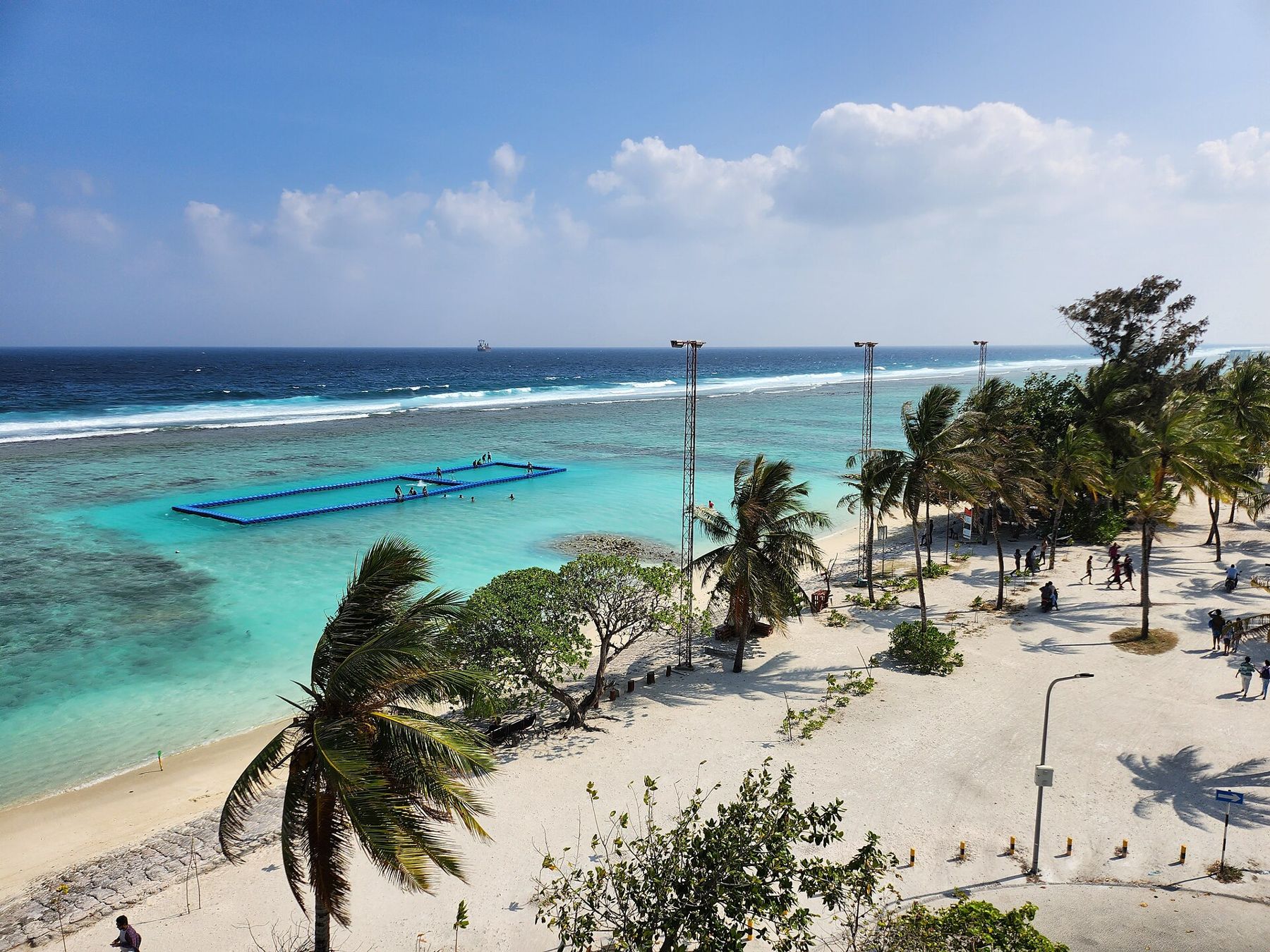
Reef and seaThe beach faces open sea, and waves break on the outer reef. Swim only in calm, marked areas, watch for currents on windy days, and never stand on the coral flats.
Fly into the Maldives and the first island you touch is not a natural one in the usual sense. Velana International Airport sits on Hulhulé, and directly beside it lies Hulhumalé, an island that did not exist a few decades ago. Work to reclaim it from the shallow lagoon began in the late 1990s, with sand pumped up from the seabed to build new land where Malé's growing population could live. Today it is a town of wide streets, apartment towers, parks and a long beach, and for many visitors it is where a Maldives trip begins or ends.
It is not a postcard island, and it does not pretend to be. What it offers is space, a calm night close to the airport and an easy, everyday look at modern Maldivian life.
Why an island was built
Malé is one of the most densely built capitals anywhere, packed onto a small island with almost no room left to expand. Hulhumalé was planned to take the pressure off. Instead of the narrow lanes of the old capital, it was laid out on a grid with broad avenues, open squares and blocks of flats, and it has been extended in phases ever since. Because the ground was raised above the surrounding lagoon, it also sits higher than much of the natural land in the atoll, a point that matters in a country so close to sea level.
Walk the streets and you will notice the difference at once. There is room for cars, cyclists and pedestrians, trees planted along the pavements, and a sense of a place still being finished, with cranes on the skyline and new towers rising at the edges.
The long artificial beach
The east side of Hulhumalé is lined by a long beach of pale sand, built along with the island and backed by palms, casuarinas and a promenade. On weekends and in the cooler evening hours local families come here to picnic, swim and play football, and the atmosphere is relaxed and sociable. Beyond the lagoon, waves break white on the outer reef, and the open ocean begins.
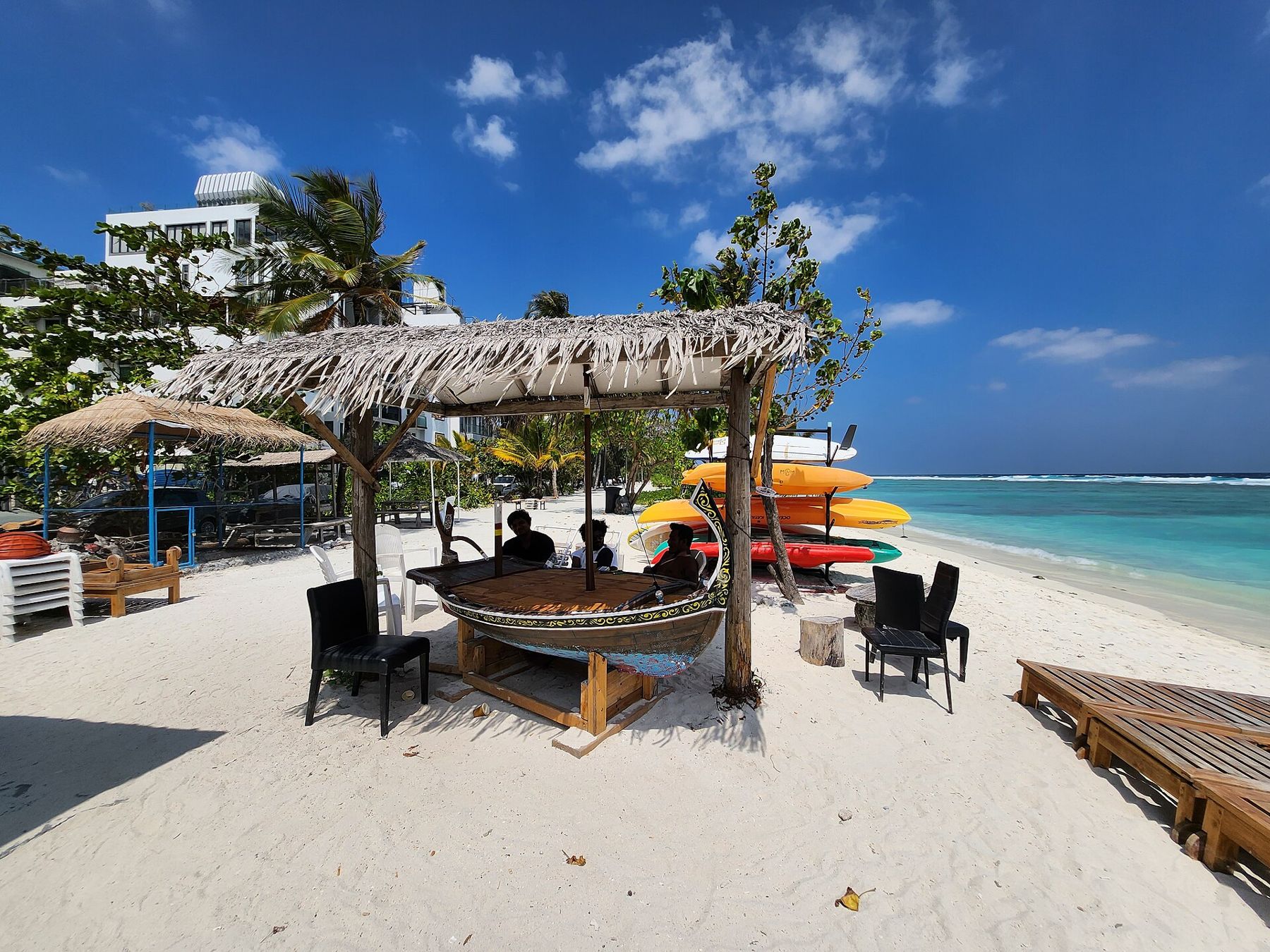
Remember that Hulhumalé is an inhabited island, not a resort. The beach is a public place used by Maldivian families, so swim in modest swimwear and put a cover-up on as soon as you leave the sand. Signs and local practice can change, so follow what you see posted. If you want somewhere set aside for bikinis, the bikini beach on Maafushi is designed for that.
Streets, flats and daily life
Away from the shore, Hulhumalé is a residential town. The newer apartment blocks are tall and modern, and the ground floors hold small shops, cafés and offices. Mosques sit within the neighbourhoods and the call to prayer carries across the wide streets just as it does on any local island. Friday midday brings the same pause, and the same customs apply: no alcohol, modest dress away from the water, and quiet respect around prayer times.
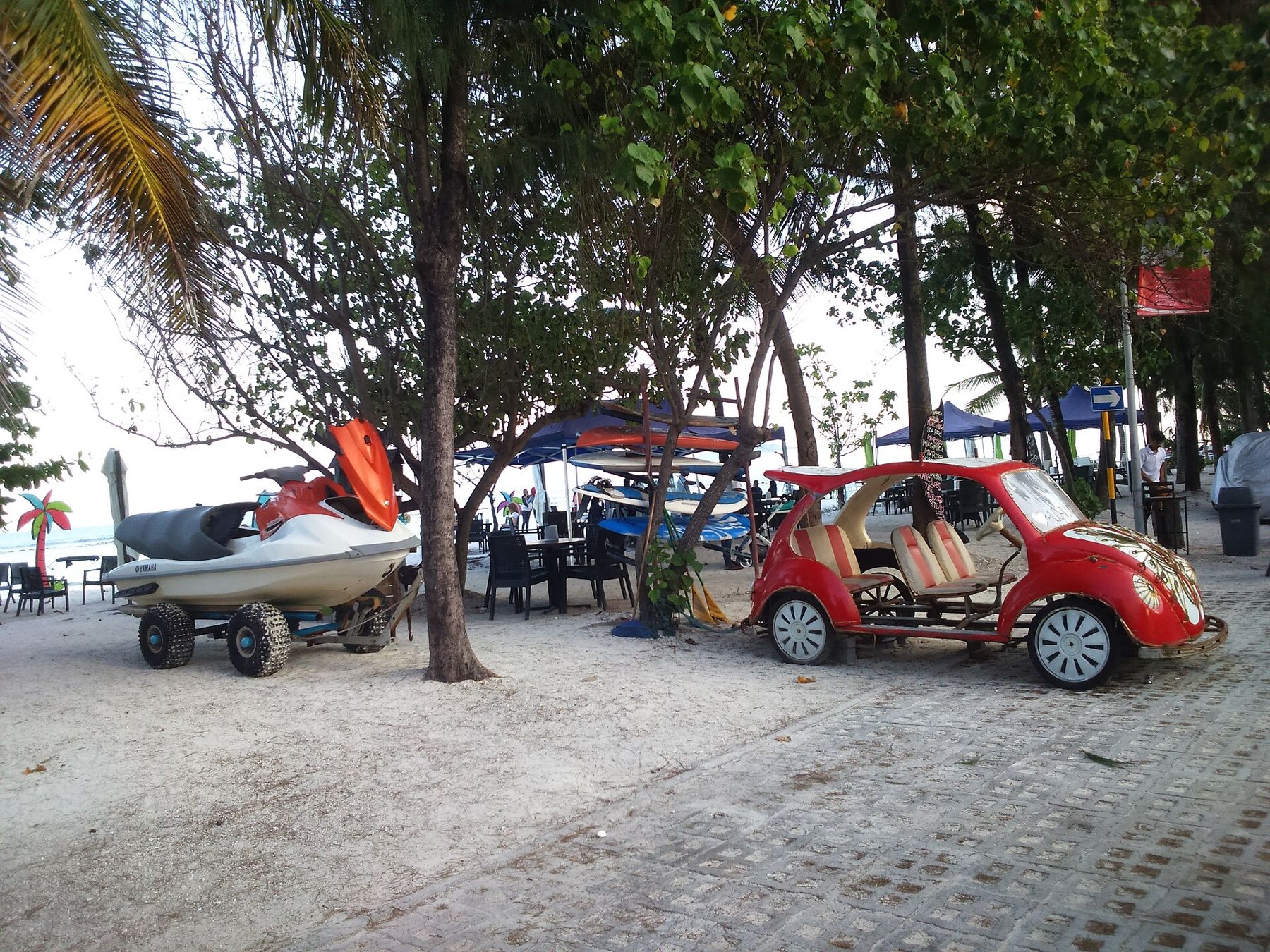
The beachfront has a cluster of places to eat and sit, along with spots that rent kayaks and other water toys; prices and opening hours vary. In the evenings, when the heat eases, the promenade fills with walkers and joggers.
 Next hop · Island waysMonsoons and the best months
A night before or after your flight
Hulhumalé's biggest draw for visitors is its position. The airport is a short drive away, which makes the island a natural place to spend a night when an international flight lands too late for the last boat to a local island, or leaves too early to risk the crossing that morning. Many travellers bound for Maafushi stay here on the first or last night, then take the boat across when it suits them. Our guide to getting to Maafushi covers the ferry and speedboat options from the airport and Malé.
Taxis and public buses link Hulhumalé with the airport; routes, frequencies and fares change. If the weather is poor and the sea is rough, an extra night here is often a sensible choice rather than a bumpy late crossing.
Across the bridge to Malé
Since 2018, the Sinamalé Bridge has connected Malé with Hulhulé, the airport island, which in turn is joined to Hulhumalé by road. That means you can travel between Hulhumalé and the capital overland, by taxi or bus, in about twenty to thirty minutes depending on traffic. Before the bridge, the crossing to Malé meant a ferry.
It makes a day trip easy. You can spend the morning on Hulhumalé's beach and the afternoon in the capital's busy streets, markets and mosques; our guide to a day in Malé suggests how to use that time.
Sea and sun on a built shore
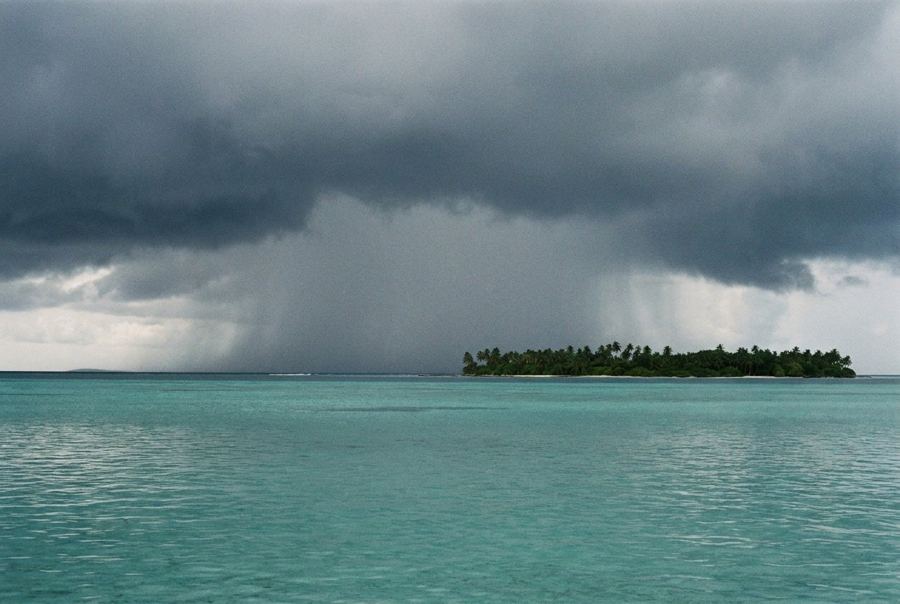
Although the shore is artificial, the sea beyond it is not. The reef flat between the beach and the breaking waves holds coral and fish, and the water over it can be shallow at low tide. Do not walk on the coral, keep well inside any marked swimming area, and be careful on windy days, when waves on the reef and currents in the lagoon pick up. The sun is fierce, especially at midday on the open beach, so use reef-safe sunscreen and find shade under the trees. For more on the water around the atoll, see our guide to snorkelling the reefs near Maafushi.