
Reef and seaOpen channels between atoll reefs can be choppy, especially in the southwest monsoon. Wear the life jacket offered, keep hands inside the boat and sit low and central if the swell builds.
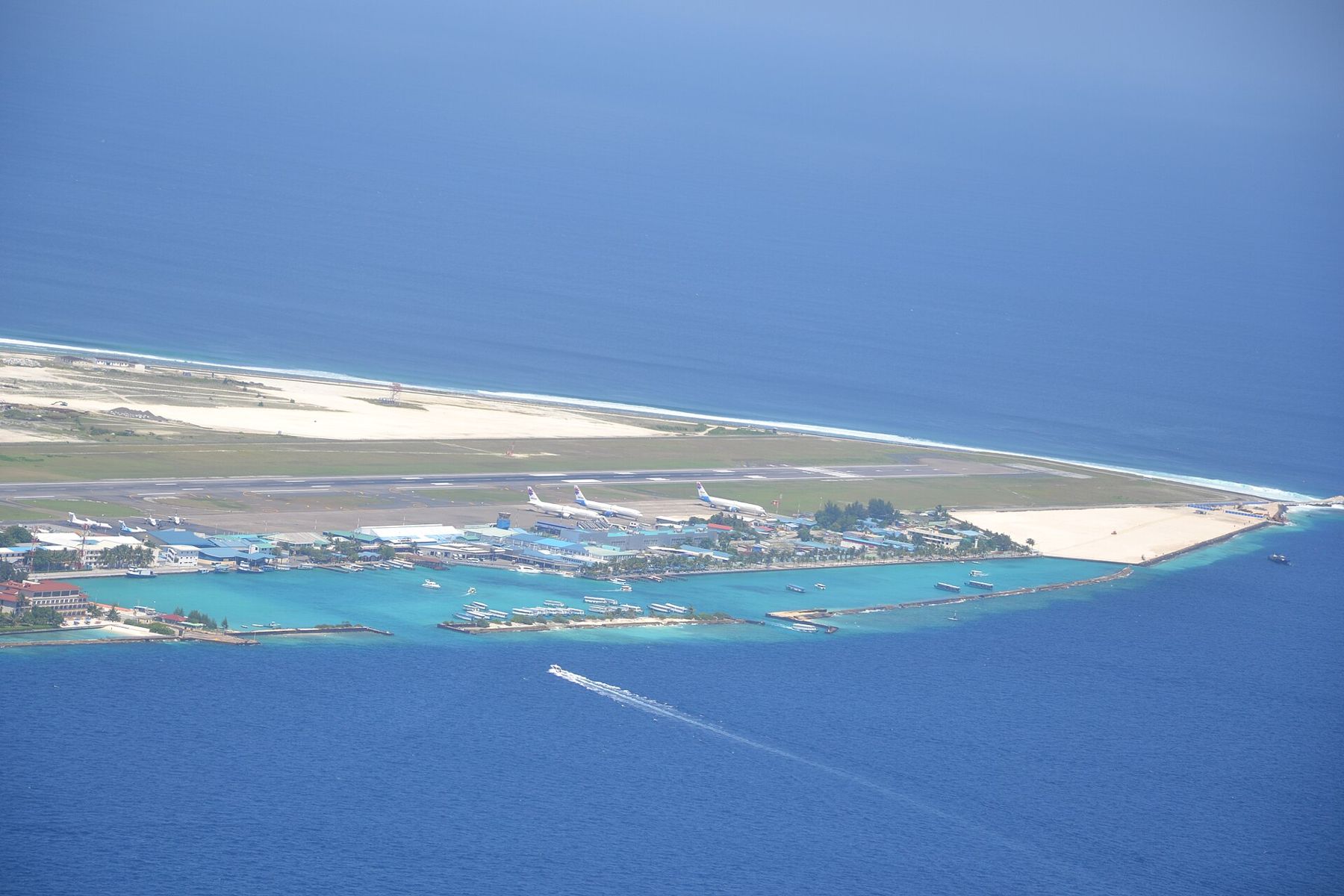
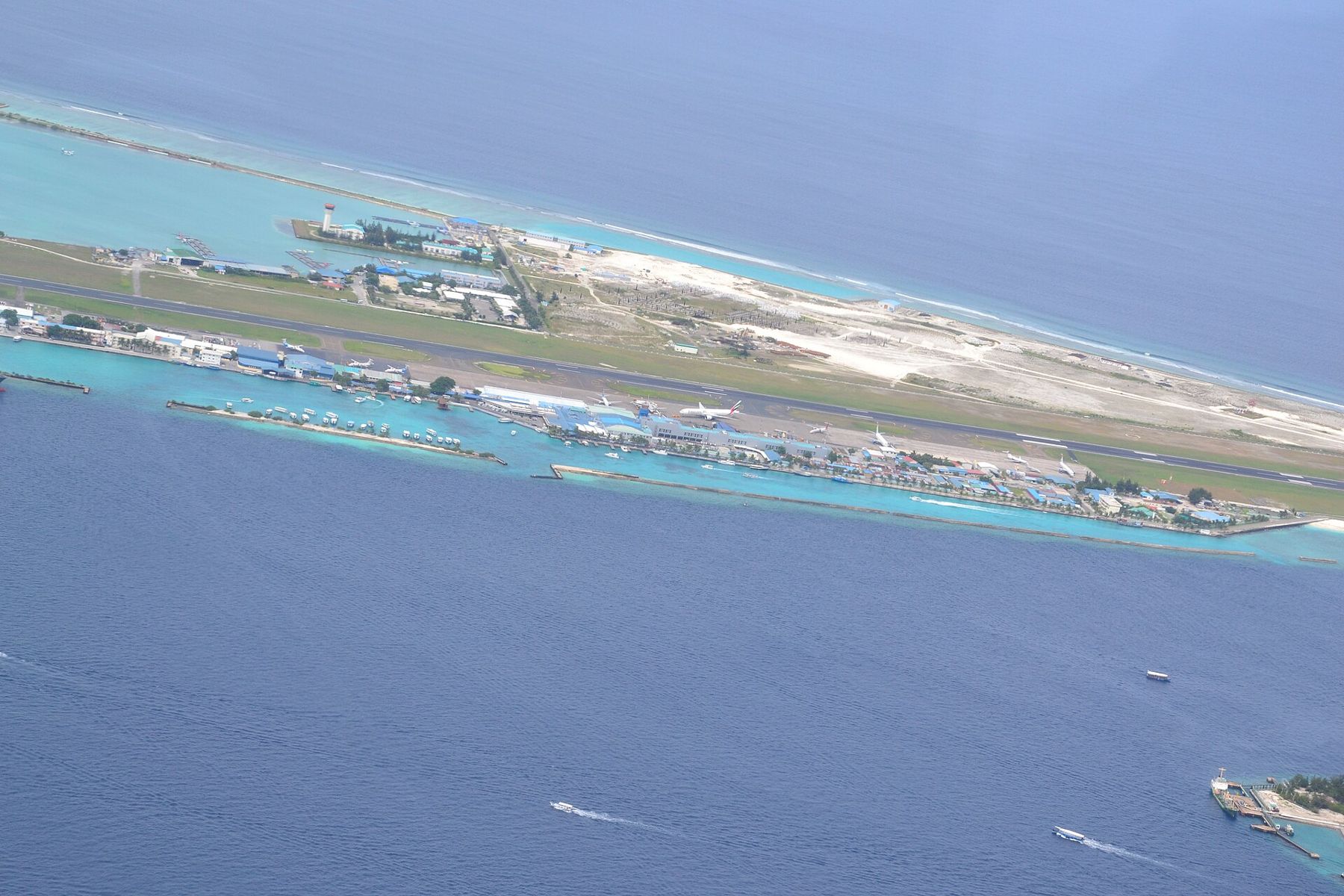
Almost every journey to Maafushi starts on a runway laid along a narrow strip of coral. Velana International Airport sits on Hulhulé, a flat island just across the water from Malé, and nearly all international flights into the Maldives land here. From the arrivals hall you walk out into heat and bright light, and within a few steps you are looking at the lagoon and the jetties where the boats wait.
Maafushi lies roughly 25 to 30 kilometres to the south, inside the same atoll, Kaafu. There is no bridge and no airstrip on the island, so the last part of the trip is always by sea. You have two broad choices: a speedboat, which is faster and costs more, or the government public ferry, which is slower and much cheaper but runs only on certain days. Both are straightforward once you know how they work.
Landing at Velana and finding the boats
The airport island is compact. Immigration and customs come first, and this is where one rule matters before anything else: you may not bring alcohol into the Maldives. Bottles found in luggage are held at customs, so leave duty-free spirits behind. Once you are through, the waterfront is only a short walk from the terminal doors.
Along the airport quay you will find counters and meeting points for boat transfers, and staff holding up name boards for passengers who arranged a pickup in advance. Most visitors heading to Maafushi arrange their speedboat seat ahead of time, often through the place where they are staying, and are met at arrivals. If you have not arranged anything, ask at the information desk inside the terminal rather than accepting the first offer outside.
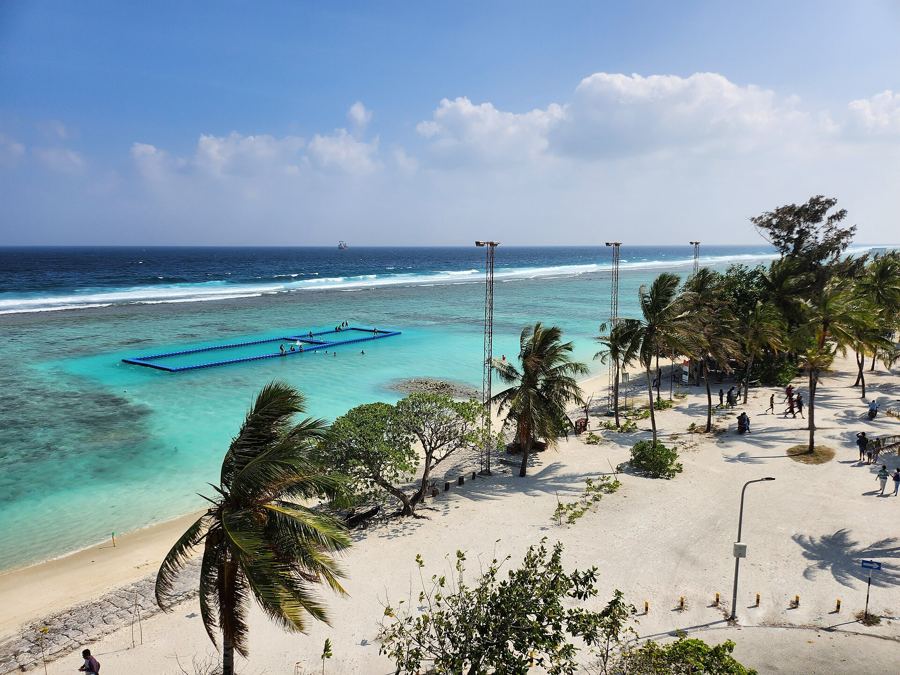
If your flight lands late in the evening, think about the timing. Speedboats to the local islands thin out after dark, and the public ferry does not run at night at all. Many travellers who land late spend a night in Hulhumalé, the newer island connected to the airport by road, and cross to Maafushi in the morning.
Shared and private speedboats
Speedboats are the way most people make the crossing. Shared speedboats leave from the airport and from Malé at set times through the day, carrying a mix of visitors and islanders with their shopping. A private speedboat costs considerably more but leaves when you want. Either way, the trip takes very roughly 30 to 60 minutes. On a flat morning in the dry months it can feel quick; on a windy afternoon with a swell running across the channels it is slower and much bumpier.
Fares are quoted per person for shared boats and per trip for private ones, and they change from season to season. Departure times for shared boats can shift with the weather or with demand, and a boat may wait for a delayed flight or leave without one. Keep a phone number for whoever arranged your seat.
Keep a phone number for whoever arranged your seat.
The boats themselves are open or half-covered fibreglass craft with bench seats and a crew of two or three. Life jackets are on board; put one on, or at least know where it is before the boat leaves the harbour. Sit towards the back if you are prone to seasickness, since the bow takes the hardest knocks.
 Next hop · MaléHulhumalé, the island built from the sea
The public ferry: slow, cheap and not every day
The government public ferry is run by the national transport company and links Malé with inhabited islands across the atoll. It is the cheapest way to reach Maafushi by a wide margin and a good way to see ordinary island travel: families going home, crates of vegetables, a box of building supplies, a motorbike tied down near the stern.
The ferry leaves from Malé rather than from the airport, so you first cross from the airport to the capital, by bus over the bridge or by a short boat ride, and then make your way to the ferry terminal on the waterfront. The crossing to Maafushi takes about an hour and a half, sometimes longer in a head sea. The key point is that it runs on set days and at set times, and not every day of the week. Timetables are revised from time to time, and holidays can change them.
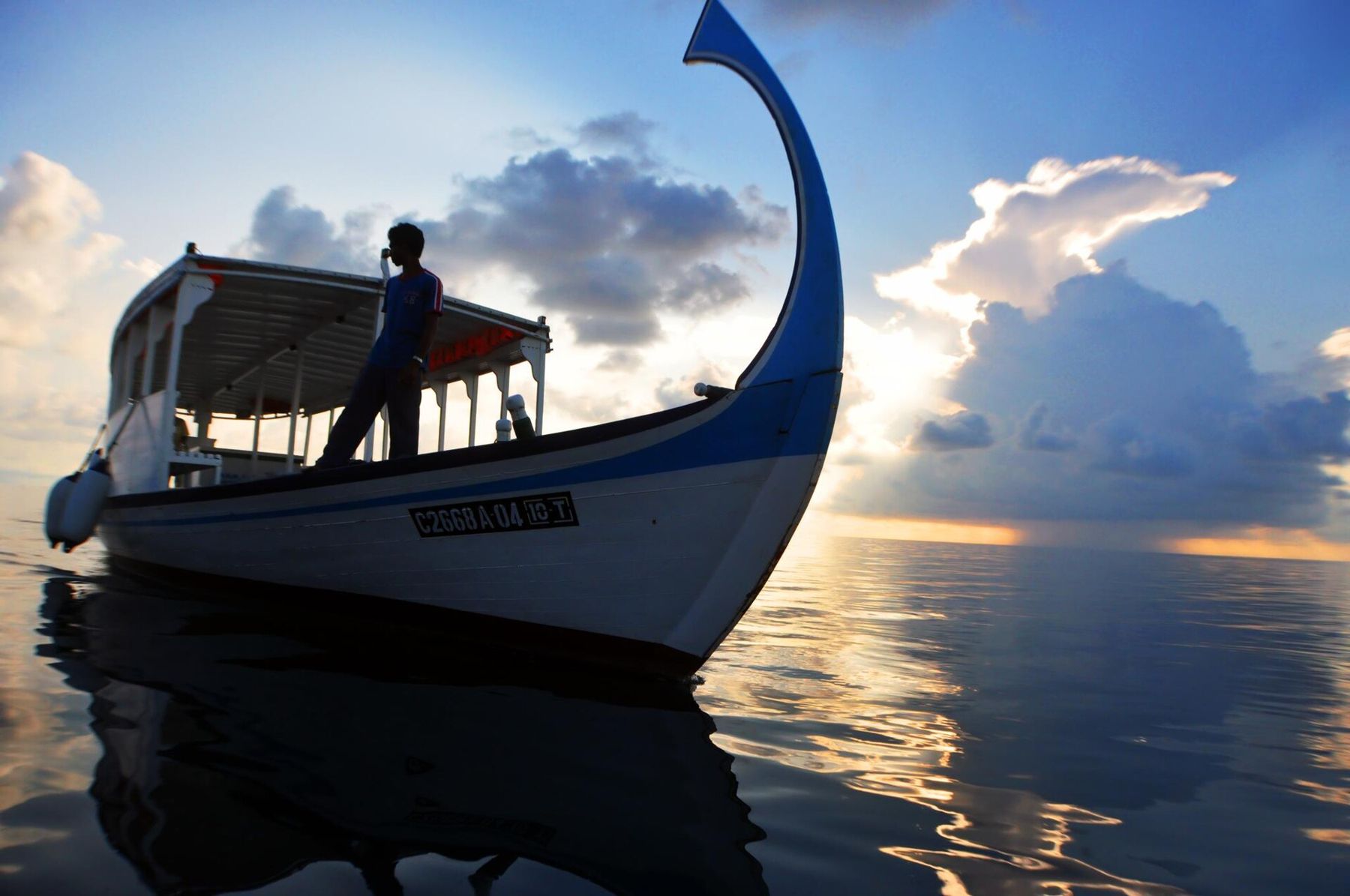
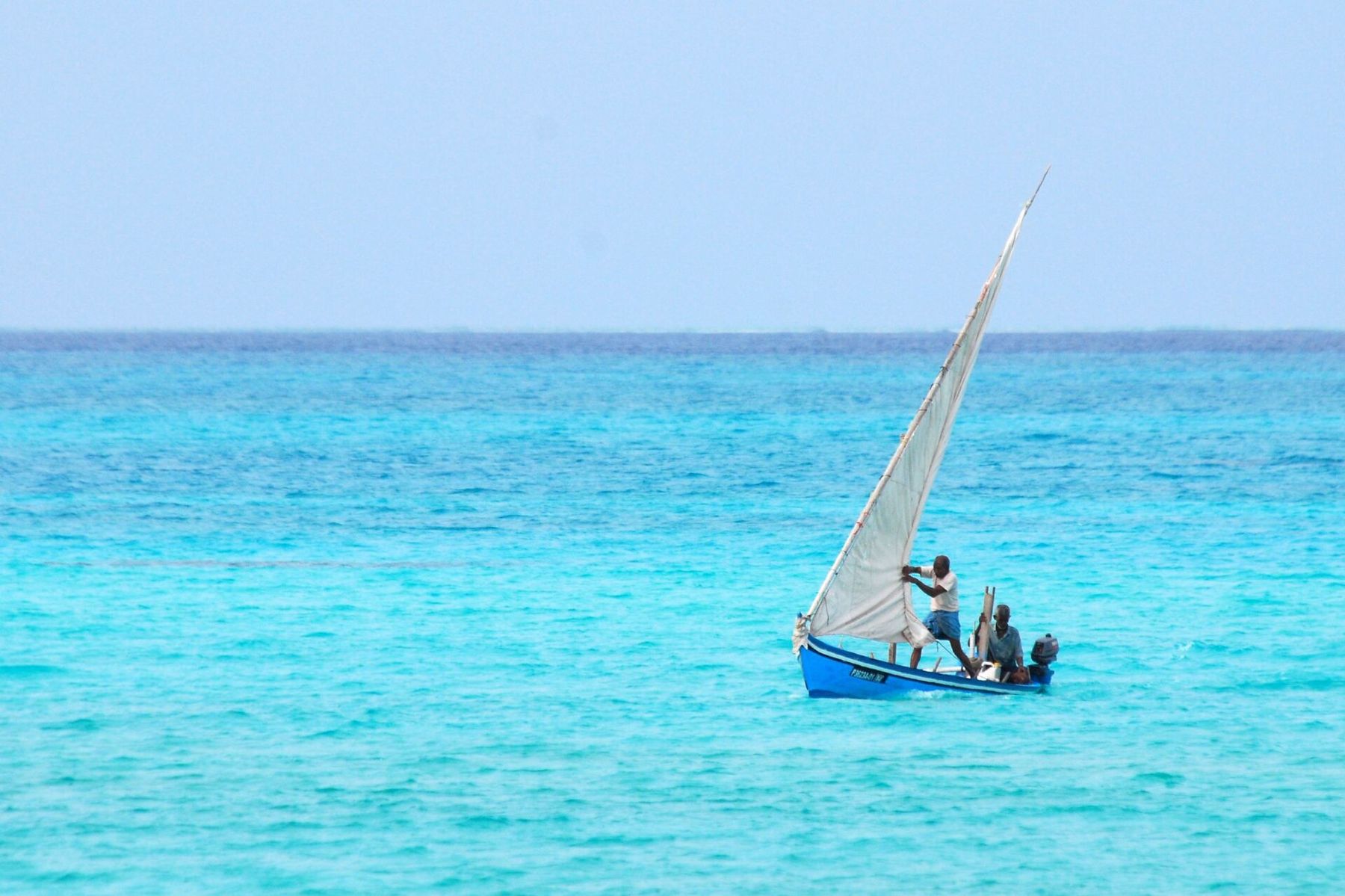
The boats on the public routes are usually large dhonis, the traditional Maldivian wooden boats, now fitted with engines and roofs against sun and rain. Seating is on benches, there is room for luggage, and the pace is gentle. On a calm day it is a slow, pleasant way to watch the islands slide past. If you have a day to spare in the capital first, our guide to a day in Malé covers the waterfront, the fish market and the mosques.
Luggage, timing and the sea
On both speedboats and ferries, bags travel in the open or under a tarpaulin and can catch spray. Pack electronics, documents and anything that must stay dry in a waterproof bag or a sealed inner pocket. Large hard suitcases fit, but they are awkward to lift on and off a rocking boat, and the crew will usually pass them hand to hand onto the quay. A soft bag is easier for everyone.
Weather is the other thing to plan around. During the northeast monsoon, roughly December to April, seas are usually calmer and crossings smoother. During the southwest monsoon, roughly May to November, winds are stronger, rain squalls come through quickly and the channels can be rough enough to slow or delay boats. Our page on monsoons and the best months explains the pattern in more detail. If you have an onward international flight, leave a generous margin and avoid planning to cross from Maafushi on the same afternoon you fly home.
Arriving on Maafushi and leaving again
Boats come into the harbour on the island's sheltered side, between rock breakwaters. The quay is a few minutes' walk from most of the village, and someone from where you are staying will often meet you. Before you step ashore, take a light shirt or wrap from your bag: away from the designated tourist beach, the island expects shoulders and knees to be covered, and the harbour is the start of the village.
For the return trip, confirm your boat a day ahead. Speedboat departures for the airport are usually timed with flights, but times can move with the weather. The public ferry back to Malé keeps its own schedule, again not every day. Cash is useful for fares and small costs along the way; our guide to money and practicalities covers currency, cards and SIM cards.
None of this is complicated. Plan the crossing around the sea and the timetable rather than around the clock, and the short trip south becomes the first quiet look at the atoll you came to see.