
Reef and seaThe tuna on your plate is mostly caught by pole and line. Leave reef fish alone when snorkelling, never feed them, and keep food scraps out of the sea.
Maldivian cooking is built from what an atoll can provide and what boats can bring. The sea gives tuna and reef fish. Coconut palms give milk, oil and grated flesh. Rice and flour arrive by boat, as do onions, spices and most vegetables. Chilli, curry leaves and lime tie it all together. On Maafushi, as on any local island, you eat close to that tradition, even in places that also serve pasta and pizza for visitors.
Breakfast: mas huni and roshi
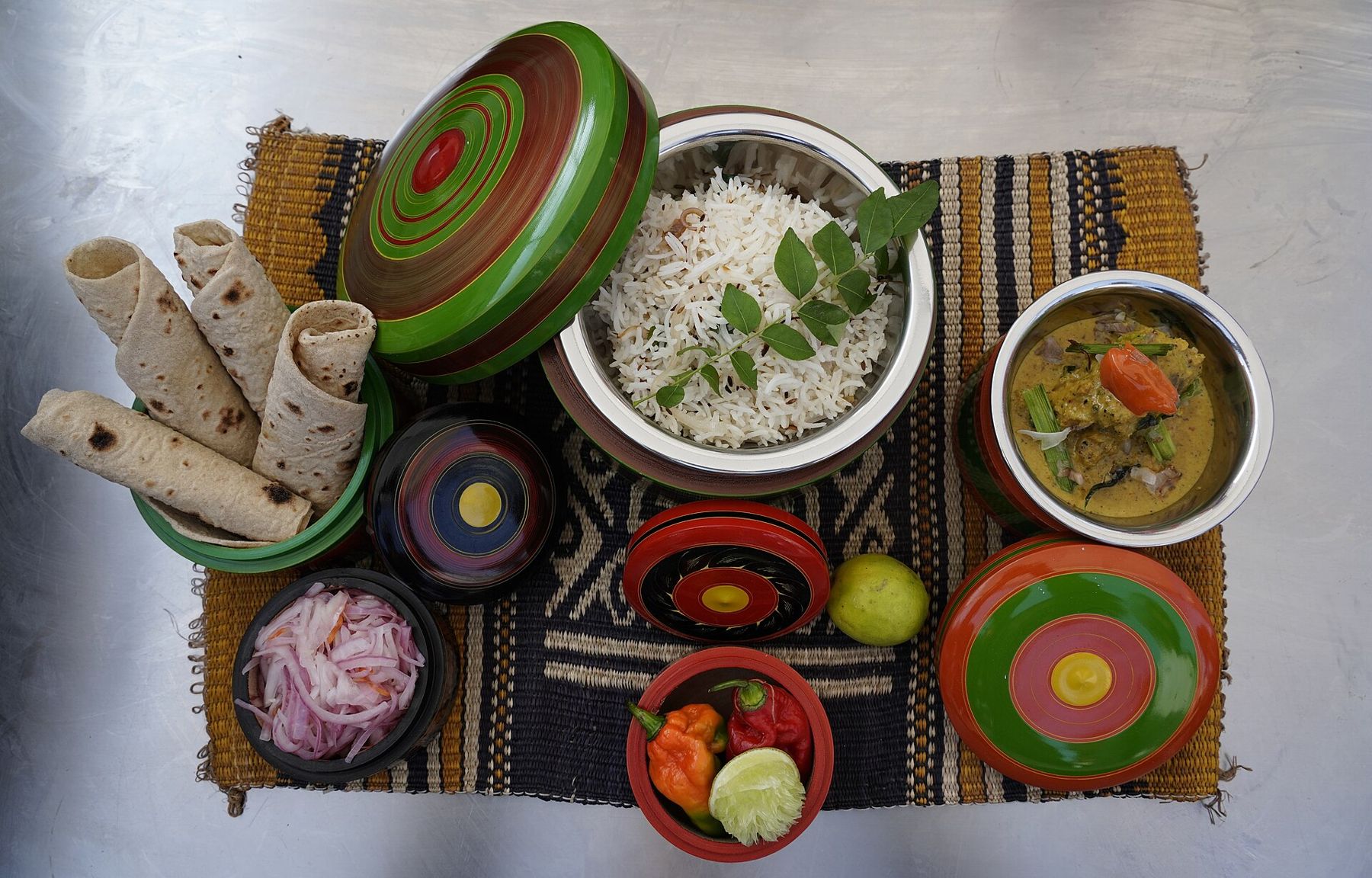
The classic Maldivian breakfast is mas huni. It is a dry mix of tuna, usually tinned or smoked, with freshly grated coconut, finely chopped onion, chilli and lime juice, rubbed together by hand until it holds. It is eaten with roshi, a thin, soft flatbread cooked on a griddle, torn and used to scoop the mix. A cup of sweet black tea comes alongside.
Mas huni is simple, fresh and surprisingly filling. Some versions add curry leaves or a little more chilli; some are milder. Guesthouses and small cafés often serve it as the local option on their breakfast menu, and it is worth asking for at least once. If you prefer less heat, say so before it is mixed.
Garudhiya: the fish broth at the heart of things
Garudhiya is a clear fish broth, usually made with tuna boiled in salted water until the fish is tender and the liquid has a deep, clean flavour. It is one of the oldest dishes in the Maldives and still one of the most everyday. You eat it with plain rice, a squeeze of lime, chopped chilli and onion, sometimes with roshi on the side. Spooned over rice and mixed by hand, it becomes a full meal.
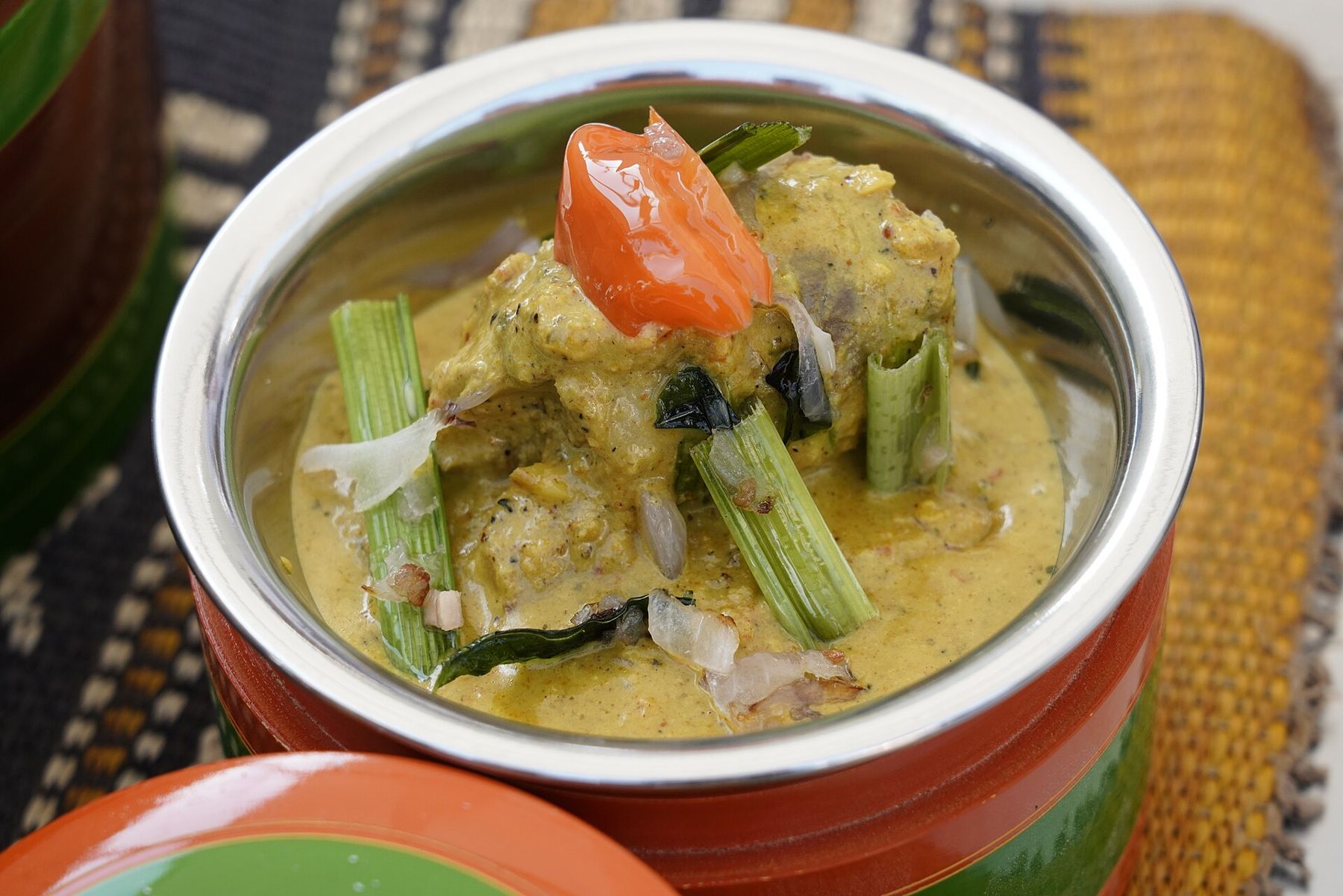
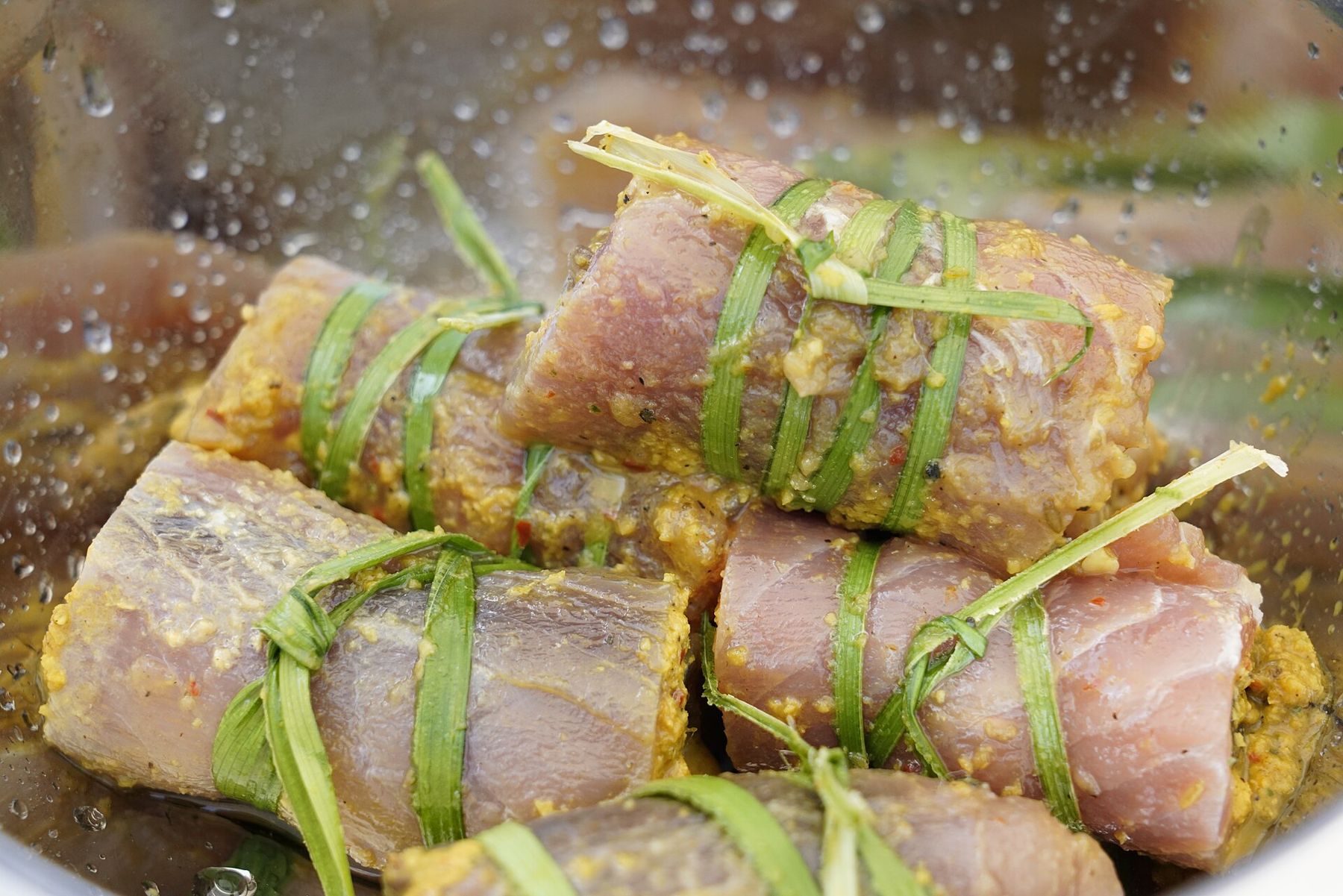
Alongside garudhiya you may find curries made with tuna or reef fish, often thickened with coconut milk, and dishes such as kandu kukulhu, rolls of tuna stuffed with a spiced paste and cooked in sauce. Fish dominates, though chicken curries are common too. Vegetables appear mostly as side dishes: pumpkin, breadfruit, banana flower and leafy greens, depending on what has arrived by boat.
Hedhikaa: tea-time short eats
In the late afternoon, Maldivians often stop for tea and hedhikaa, a word usually translated as short eats. These are small savoury and sweet snacks set out on a counter or a plate in the middle of the table. Many are fried, many contain tuna, and almost all are made fresh each day.
Common savoury ones include gulha, small round dumplings filled with tuna, coconut and chilli; bajiya, triangular pastries stuffed with a similar mix; and fish cutlets or patties. Sweet ones may include little cakes, coconut sweets and fried dough. You choose a few, pay for what you take, and drink sweet black tea or milky tea with them. It is an easy, cheap way to sample local flavours, and a good reason to walk the village streets in the late afternoon.
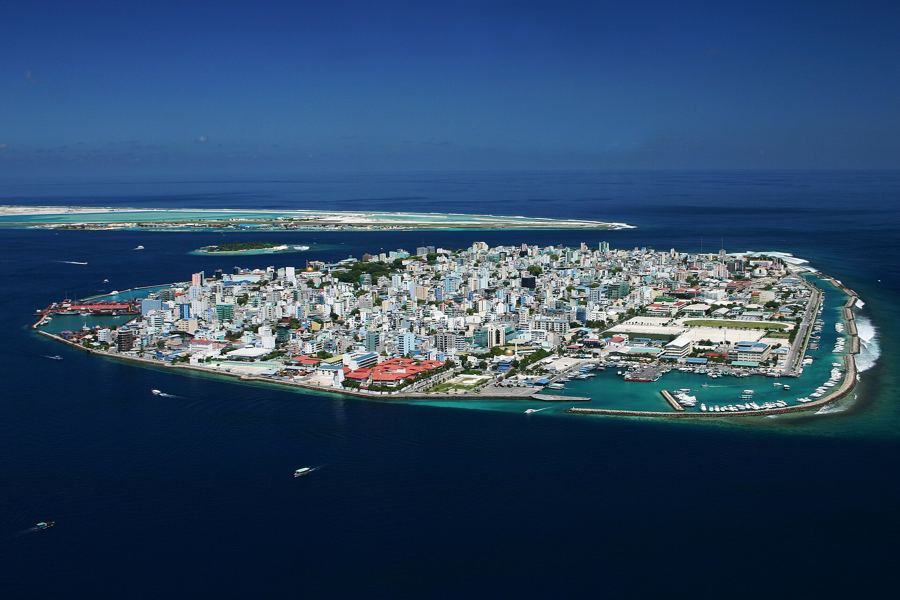 Next hop · MaléA day in Malé
Tuna everything, and the rules around it
Tuna is the backbone of the Maldivian diet. Skipjack and yellowfin are caught by traditional pole-and-line fishing, a method that takes fish one at a time and avoids much of the bycatch of large nets. Smoked and dried tuna, known as valhoa mas, keeps for a long time and turns up in many dishes, while a thick, salty tuna paste called rihaakuru is used as a seasoning. You may see fishermen unloading at the harbour in the morning, the tuna laid out on the quay.
Pork is not eaten, and food is halal. Alcohol is not sold or served on local islands at all, so meals come with water, fresh juice, soft drinks, coconut water or tea. If you want a drink with dinner, the answer is a resort or a liveaboard, not Maafushi. Respect this rule rather than bringing alcohol onto the island, which is not allowed.
Eating out on Maafushi
The village has a range of small cafés and eateries, from local tea shops serving hedhikaa and rice and curry to places with menus aimed at visitors. Many guesthouses also serve meals. Prices vary widely; tourist-oriented menus cost more than local tea shops, and taxes or service charges may be added. Seafood barbecues are often offered in the evening, especially in the drier months. Card payment is not always accepted, so carry cash.
Portions of rice and curry tend to be generous. Food is often eaten with the right hand in local homes and tea shops, though cutlery is always available for visitors. Dress modestly when eating in the village, as you would anywhere outside the bikini beach.
Ramadan and meal times
During Ramadan, Muslims fast from dawn to sunset. On local islands, daytime eating and drinking in public is avoided, and many local cafés close during the day or open only for visitors indoors. In the evening the fast is broken with dates, water and a meal, and tea shops fill with people and short eats well into the night. If you visit during Ramadan, eat discreetly during the day and enjoy the lively evenings. Our guide to Ramadan on a local island explains the timing and customs in more detail.
At any time of year, a few habits help: try mas huni at breakfast, eat garudhiya at least once, stop for hedhikaa in the afternoon, and ask what has come off the boats that day. Most cooks are happy to explain a dish, and a question about the food is one of the easiest ways to start a conversation on a local island.