
Reef and seaAt the harbour, stay off the boat ramps and keep clear of mooring lines. Do not swim inside the harbour, where boats move constantly and the water is shallow and busy.
Most visitors meet Maafushi through its beach and its boat trips, and plenty leave without ever turning down a side lane. That is a pity, because the village is the reason the island feels different from a resort. Here people go to school, to work, to the mosque and to the harbour, and the streets carry all of it in a space you can cross on foot in a few minutes. A walk through it costs nothing and asks only for good manners and the right clothes.
This guide follows a loose loop rather than a fixed route. The island is too small to get lost on, and the best way to see it is to wander, turn back when a lane ends at the sea, and try the next one.
Sand underfoot, paving in places
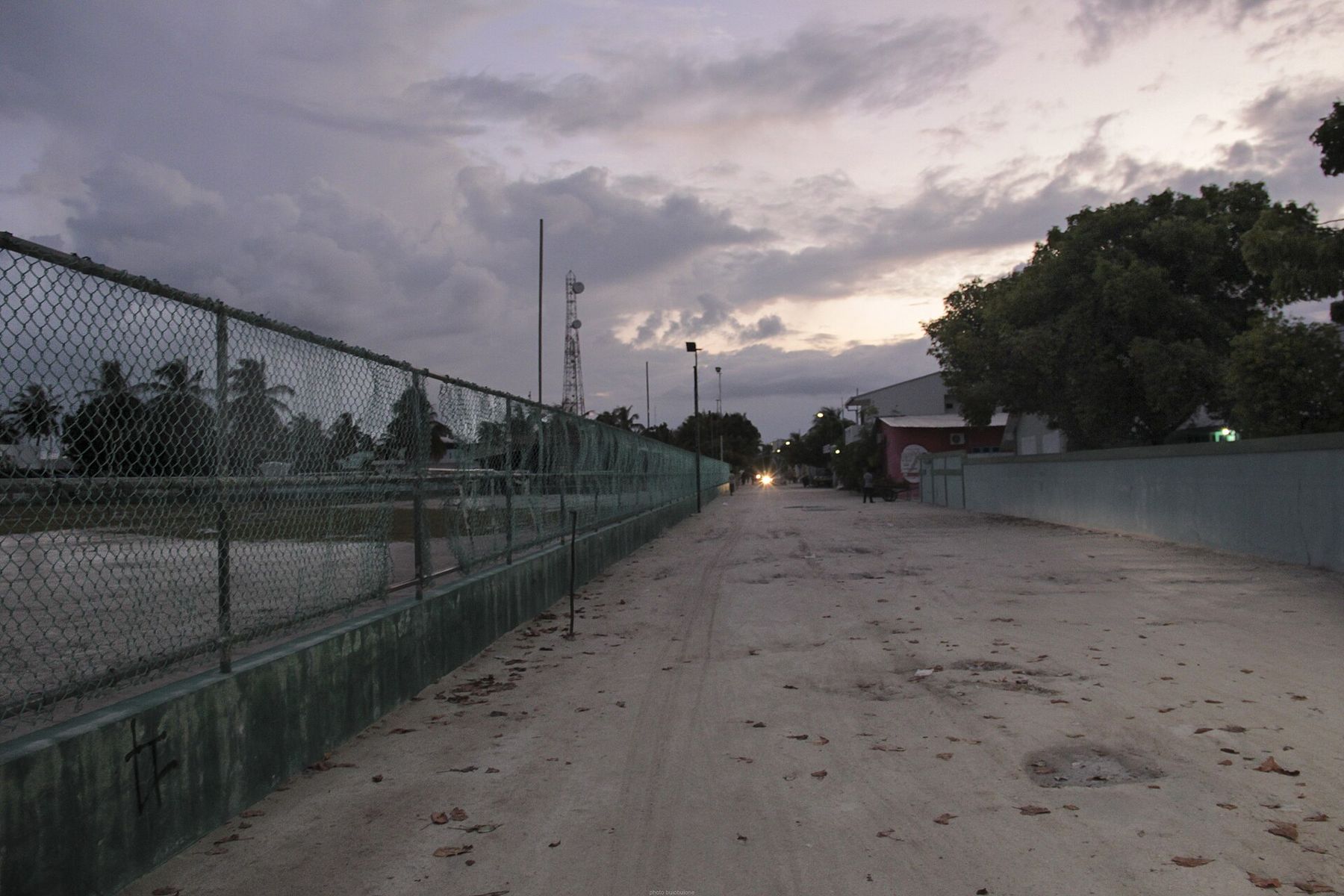
Many of Maafushi's lanes are still sand, packed hard by footsteps and tyres and swept clean in front of houses. Others have been paved, and the mix changes as the island grows. After a heavy shower in the wetter months, the sandy stretches hold puddles for a while and the paved ones dry first. Light sandals are fine, but expect sand in them by the end of any walk.
Motorbikes are the main traffic. They move slowly on the whole, but they come round corners with little warning, and the lanes are narrow enough that you will want to step aside for them. Small delivery trucks and handcarts carry goods from the harbour to the shops. Walk on one side, keep an eye behind you at junctions, and you will have no trouble.
The harbour, where the day starts
The harbour is the island's front door. Dhonis, the traditional wooden boats now almost all fitted with engines, tie up beside fibreglass speedboats and the occasional supply barge. In the morning you may see fish being landed and ice being carried off; through the day the speedboats come and go with visitors and residents bound for Malé and other islands. When the sea is up, the breakwater of grey rock takes the swell and the boats inside sit calmly.
It is a good place to stand and watch, as long as you stay out of the way. Ropes run across the quay, people are lifting heavy loads, and boats reverse with little room to spare. If you are arriving or leaving, our guide to getting to Maafushi covers the boats themselves.
Mosques, school and the football ground
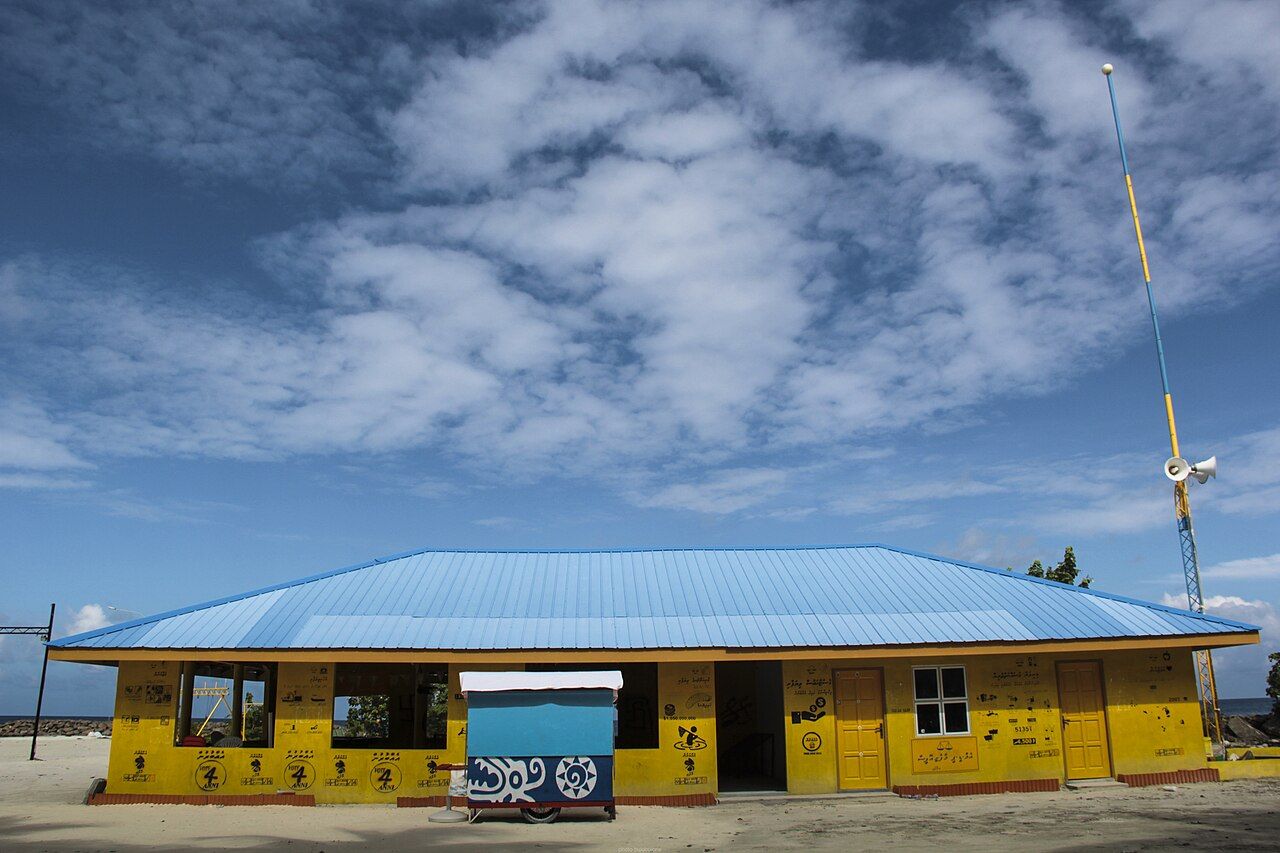
Maafushi has more than one mosque, and you will hear the call to prayer from them five times a day. The buildings are working places of worship, not sights. You can admire them from the street; if you would like to go inside, ask first, dress fully covered and remove your shoes, and avoid prayer times. On Friday around midday the island goes quiet as men head to prayers and many shops close for a while. Our page on local island rules explains the customs behind this.
The school is one of the busiest places on the island at the start and end of the day, when children in uniform stream through the lanes on foot and on the backs of parents' motorbikes. Treat the school grounds as you would anywhere: walk past, do not wander in, and do not photograph the children.
The football ground sits behind a high chain-link fence, and in the late afternoon it becomes the island's living room. Matches, training and kickabouts start once the heat drops, and people gather along the edges to watch. It is one of the easiest places to sense how close-knit the community is.
 Next hop · On the islandWhat you eat on a local island
Coral-stone walls and new buildings
Look closely at the older houses and garden walls and you will see the material that built the Maldives for centuries: blocks of coral stone, laid in courses and often plastered over, with the rough texture showing where the render has worn away. Coral is no longer cut for building, and newer houses use concrete block, painted in greens, blues, pinks and yellows. Corrugated metal roofs keep off the monsoon rain.
Alongside the family homes, a growing number of guesthouse buildings rise three, four or more storeys above the lanes. They are a clear sign of how much tourism has changed the island since guesthouses were first allowed on local islands, and you will see construction under way in more than one place. The contrast between a single-storey coral-walled house and a new block next door says a great deal about Maafushi today. Our overview of Maafushi as a whole covers how that change began.
Photographing people and homes
Maafushi is a place where people live, and photography needs some care. Ask before you take a picture of anyone, and accept a shake of the head without fuss. Many women in particular prefer not to be photographed. Do not photograph children without a parent's clear agreement, and keep your camera away from people at prayer, in the mosque or at the harbour while they work.
Homes deserve the same respect. Shooting a painted doorway from the street is generally fine; pointing a lens over a wall into someone's yard is not. Drones are a separate matter with their own rules.
- Ask first, every time a person is the subject.
- Leave children out of your pictures unless a parent says yes.
- Stay outside walls and gates.
- Put the camera down around the mosques at prayer time.
Long sleeves, shade and the village lanes
The village is the part of Maafushi where modest dress matters most. Cover your shoulders and knees, whoever you are, and keep swimwear for the bikini beach. A light long-sleeved shirt also helps against the sun, which is strong even on cloudy days.
Walk early or late. Mornings are cooler and the harbour is at its liveliest; late afternoon brings football, families out on the streets and softer light. The middle of the day is hot, bright and quiet, and many people stay indoors. Carry water, as there are small grocery shops but you will not always be near one when you need it.
Keep noise down after dark, especially near houses and mosques, and take your rubbish with you. Small, polite gestures go a long way on an island where everyone knows everyone. A greeting and a smile are almost always returned, and an unhurried walk often ends with a little more understanding of the place than any boat trip can give.