
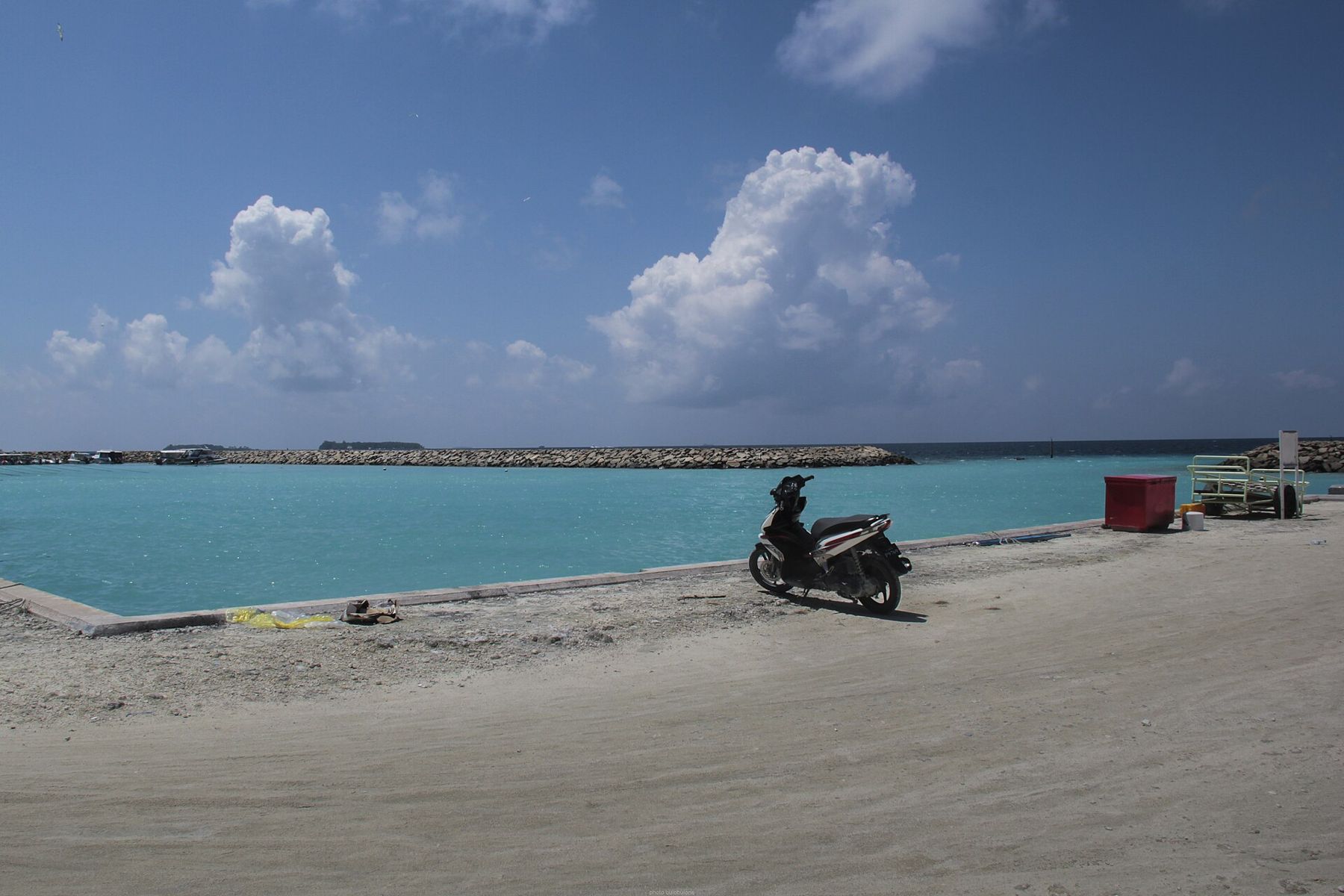
Reef and seaCurrents can run hard around the island's edges and the harbour mouth. Swim where others swim, never stand on coral, and treat the midday sun with real caution.
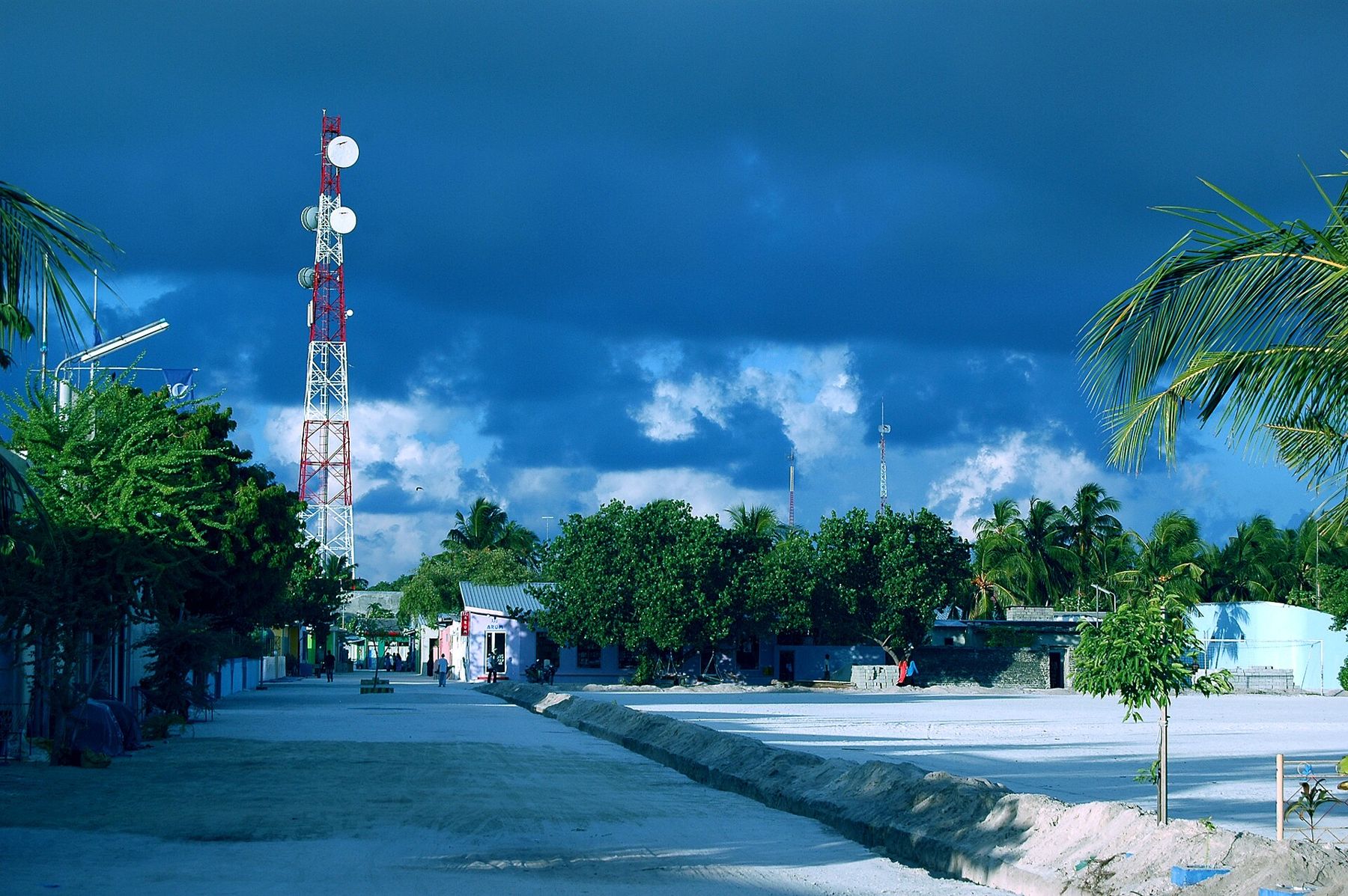
Maafushi is a small, low island in Kaafu Atoll, roughly 25 to 30 kilometres south of Malé across open lagoon and channel. A few thousand people live here. Seen from a boat, it is a line of palms and pale walls with a tall telecom mast rising out of the middle, a breakwater of grey rock around the harbour and white sand running along the shore. There is no runway, no grand architecture and nothing pretending to be something else. That ordinariness is the point.
For most of the history of Maldivian tourism, visitors and residents lived apart. Tourists stayed on resort islands, each one a self-contained property, and inhabited islands such as Maafushi saw few outsiders. That changed after 2009, when new regulations allowed tourist accommodation on inhabited islands. Guesthouses began to open, and Maafushi, close to the capital and the airport, became one of the first and busiest local islands for visitors. Today you can stay among fishing families, school runs and Friday prayers for a fraction of what a resort costs, provided you accept the island on its own terms.
Where it sits and how you arrive
The island lies in the southern part of Kaafu Atoll, the atoll that also holds Malé and the international airport. Most people arrive by speedboat from the airport or Malé, a crossing of very roughly 30 to 45 minutes depending on the sea. A cheaper public ferry runs on some days and takes closer to an hour and a half. Timetables, fares and days of operation change; our guide to getting to Maafushi covers the crossing.
The harbour is where everything begins and ends. Dhonis, the traditional wooden boats now mostly fitted with engines, tie up beside speedboats and supply barges. Fishermen unload in the morning, cargo comes in through the day, and in the late afternoon people walk out along the quay to watch the light change over the lagoon.
An island you can cross on foot
Maafushi is small enough to walk from end to end in a quarter of an hour. The streets are packed sand, swept and raked, and the main ones run the length of the island while short lanes cut across between the shores. Motorbikes are common and a few small trucks carry goods, but most of the time the loudest sounds are birds, the call to prayer and someone sweeping a doorstep.
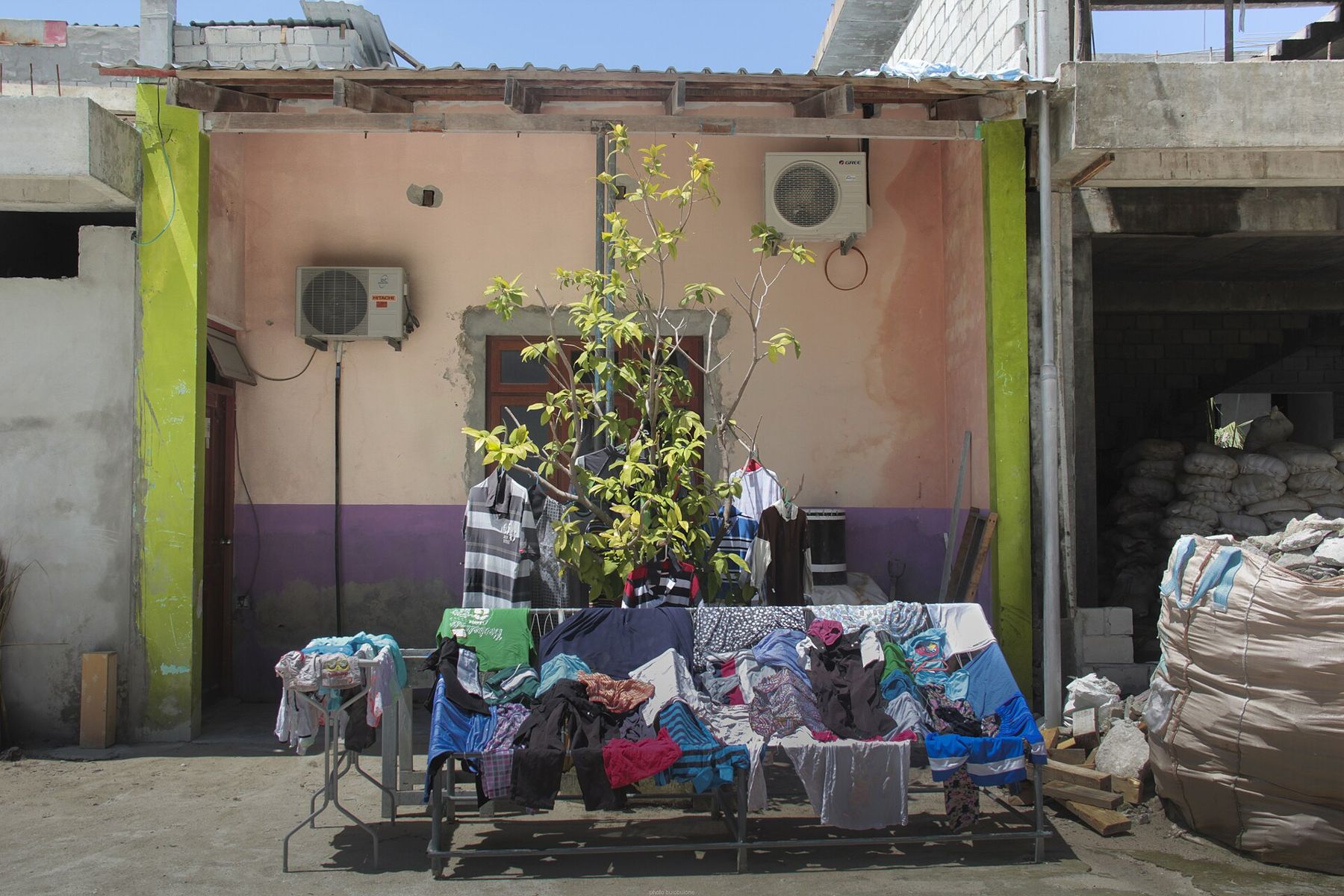
The village has mosques, a school, a health centre, a football ground, small grocery shops and the island council office. Older houses have walls of coral stone, while newer ones are concrete, often painted in bright greens, pinks and blues. Our guide to walking the village streets goes lane by lane, but the short version is that the island rewards slow, aimless walking more than any itinerary.
Maafushi is also home to a large state prison, set apart behind its own walls. It is part of the island's identity in the Maldives, and you will see its perimeter, but it plays no part in a visitor's day.
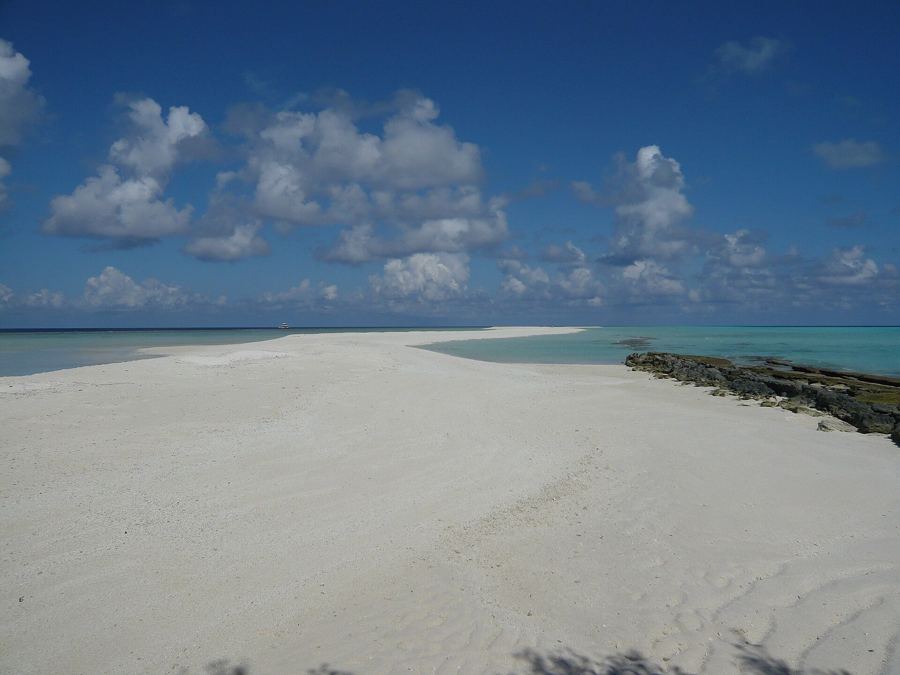 Next hop · The seaSandbank picnics in the South Malé Atoll
Living by local island customs
The Maldives is a Muslim country, and inhabited islands keep Islamic customs in everyday life. Alcohol is not sold or served on Maafushi. Away from the designated tourist beach, both men and women are expected to dress modestly, which in practice means shoulders and knees covered in the village. The designated bikini beach is screened off so that visitors can swim and sunbathe in swimwear without stepping outside those customs.
Friday is the main day of prayer, and the island slows noticeably around midday. Five times a day the call to prayer sounds from the mosques, and some shops close briefly. During Ramadan, eating and drinking in public during daylight is avoided, and daytime life moves more slowly while evenings become lively. None of this is difficult. It asks for a little attention, a willingness to cover up when you leave the beach and the courtesy to ask before photographing people.
It asks for a little attention, a willingness to cover up when you leave the beach and the courtesy to ask before photographing people.
What a day here looks like
Most visitors build their days around the water. Mornings are for boat trips: snorkelling over nearby reefs, a stop on a sandbank, perhaps a look for turtles or rays. Afternoons are for the beach, a nap through the hottest hours, or a walk through the village once the shade lengthens. Evenings bring cooler air, families out on the streets and simple meals of fish, rice and curry. Our guide to what you eat on a local island covers breakfast mas huni, garudhiya broth and the snacks called hedhikaa.
Prices on Maafushi are generally lower than on resort islands, but they are not low. Almost everything arrives by boat, and imported goods cost more than on the mainland of most countries. Taxes and service charges apply to tourist services. Carry some cash, since not every place takes cards.
Growth, rubbish and the island's limits
Tourism has brought work and income to Maafushi, and it has also brought strain. Building sites, new guesthouse blocks and a steady flow of boats are part of the view. Waste is the hardest problem on any small island: everything that arrives must either be used, shipped away or dealt with on a few hectares of sand.
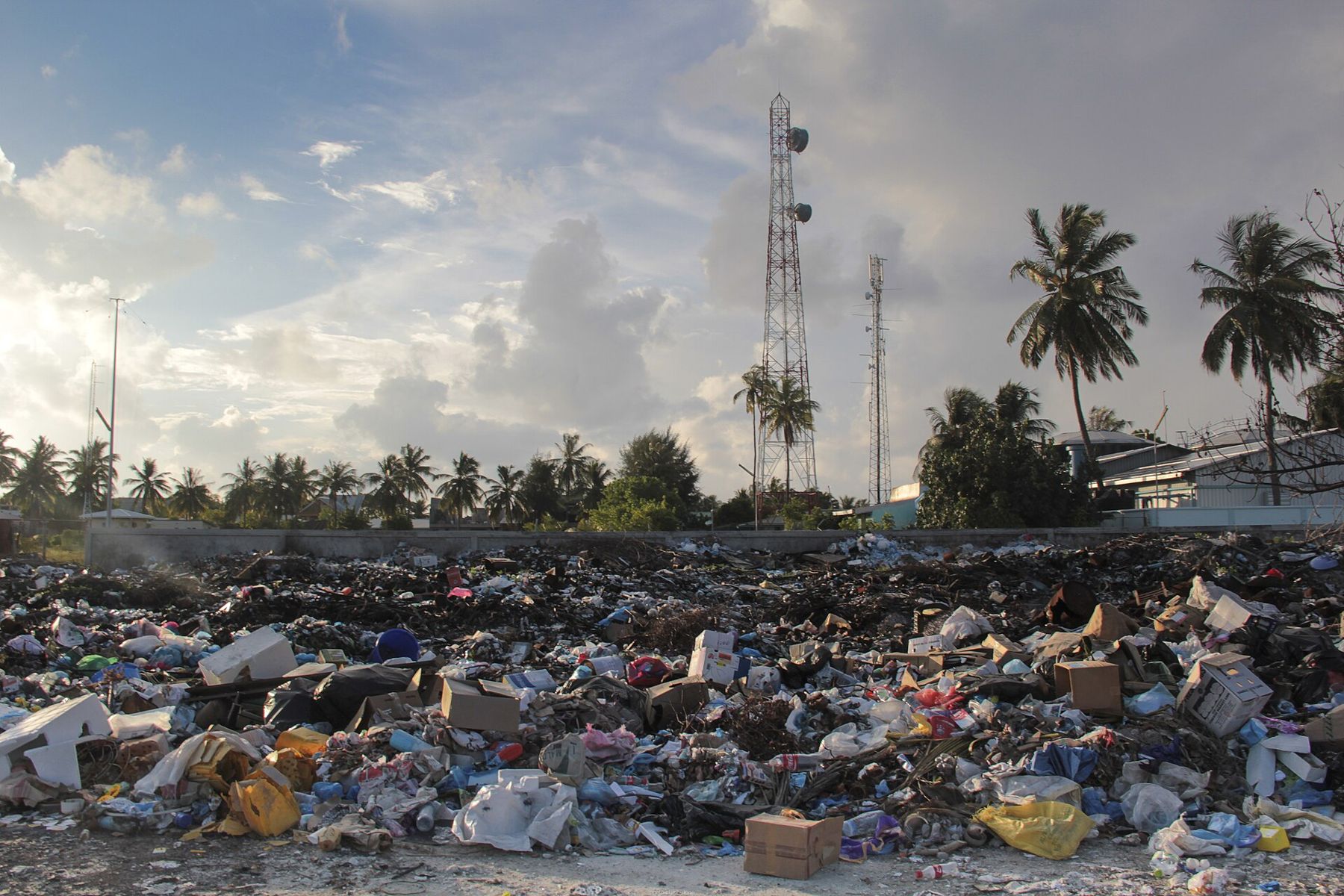
You can help in small ways. Refill a water bottle rather than buying plastic ones, refuse bags you do not need, and carry your own rubbish back from beaches and boat trips. Use reef-safe sunscreen and keep it off coral by wearing a rash vest in the water. These habits are modest, but multiplied across thousands of visitors a year they matter on an island this size.
When to come
The northeast monsoon, roughly December to April, usually brings drier weather, calmer seas and the clearest water, and it is the busiest time of year. The southwest monsoon, roughly May to November, is wetter and windier, with more rain squalls and rougher crossings, though there are many fine days and fewer visitors. Weather in the atolls changes fast in any season, so leave room in your plans for a cancelled boat trip or a grey morning.
Plan at least one slow day with no boat trip at all. Walk the lanes in the morning, sit by the harbour in the afternoon and watch the island go about its business.
Come with modest expectations of luxury and generous expectations of the sea, and Maafushi makes sense quickly: a working island that opened its doors, still learning how many visitors it can hold.